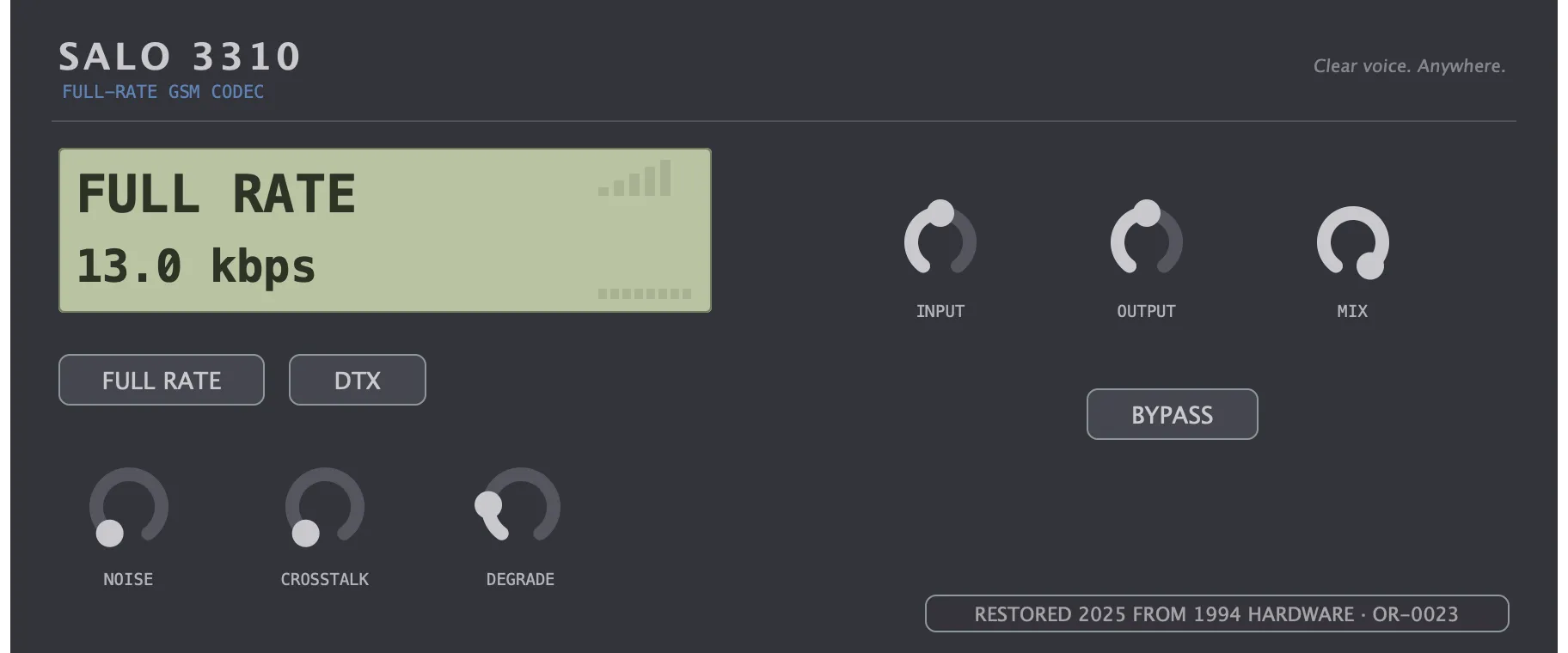
OR-0023
Salo 3310 — Full-Rate GSM Codec
The everyday voice of 90s GSM: the watery, half-swallowed, faintly robotic sound of a mobile call, and the workhorse of the whole Salo line.
Issued without charge — the archive’s study copy.
Orrery — Copenhagen
The record
OR-0001 — OR-0044
In order of restoration
Issued as VST3 · AU
Orrery — Copenhagen
Every restoration receives an Orrery catalogue number — OR-0001 onward — assigned in the order Orrery restored it, regardless of which original brand it came from. The catalogue is a single chronological record of the archive's work. OR-0001 is the Halvyn reverb that started everything.
Salo
Salo, Finland · 1991 – c. 2004
OR-0023
The everyday voice of 90s GSM: the watery, half-swallowed, faintly robotic sound of a mobile call, and the workhorse of the whole Salo line.
Issued without charge — the archive’s study copy.
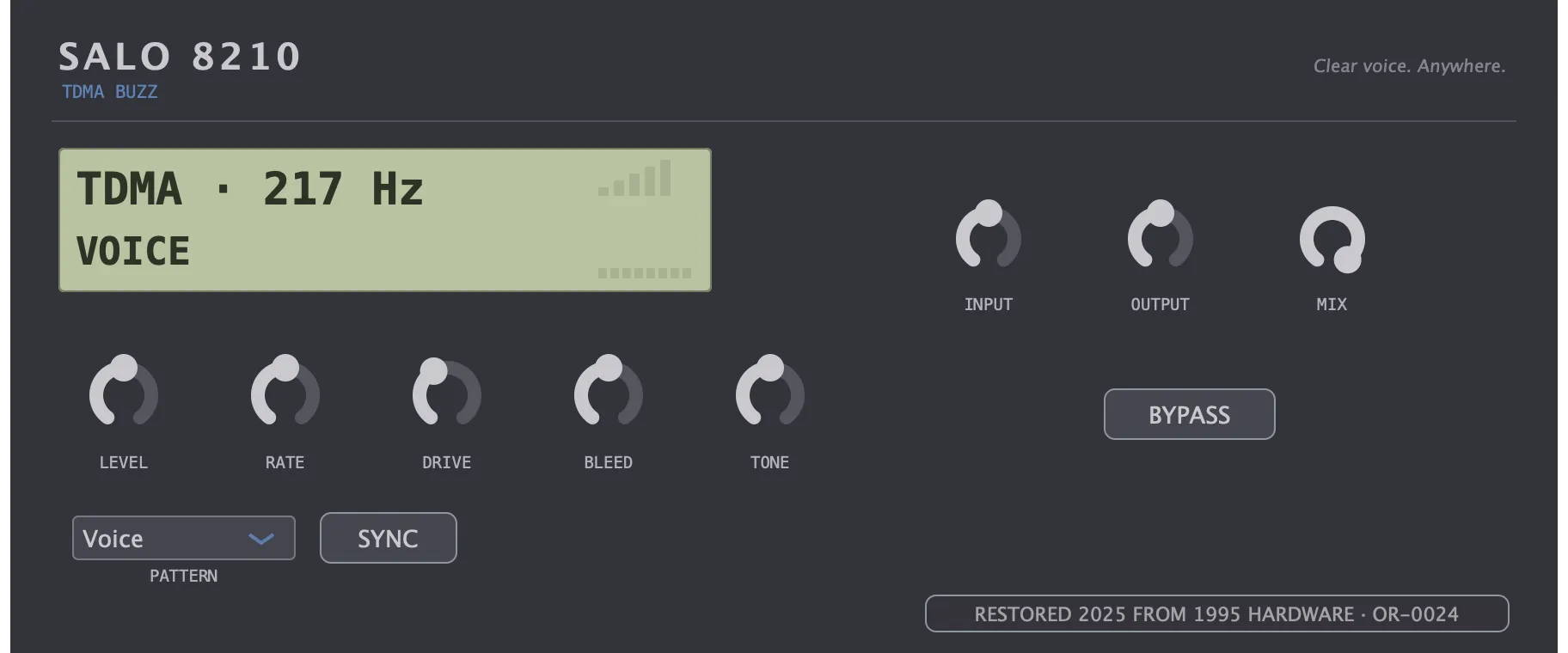
OR-0024
The flagship, and the most recognizable artifact of the era: the "da-da-da—dun-dun-dun" interference a GSM handset induced into nearby speakers and guitar pickups.
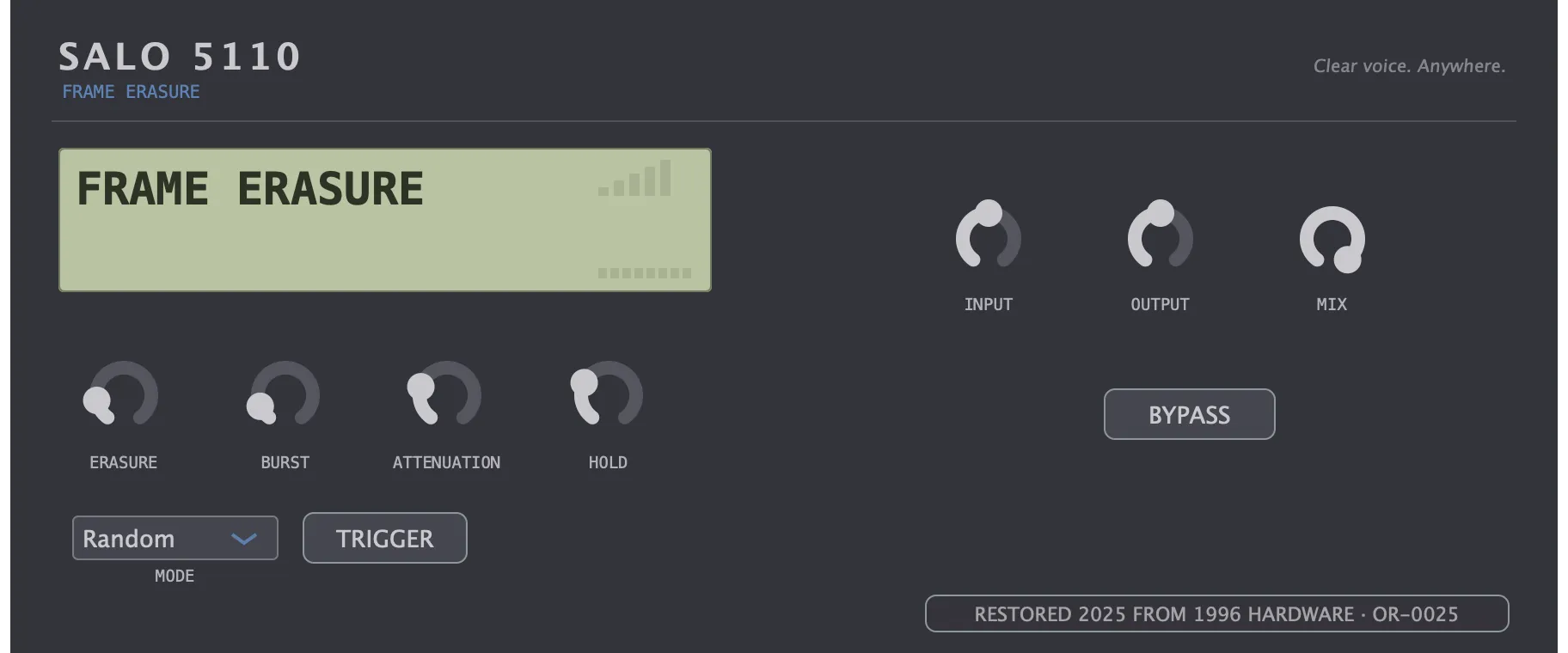
OR-0025
The dying call: the robotic freeze, the underwater warble, then silence, as the network loses frames.
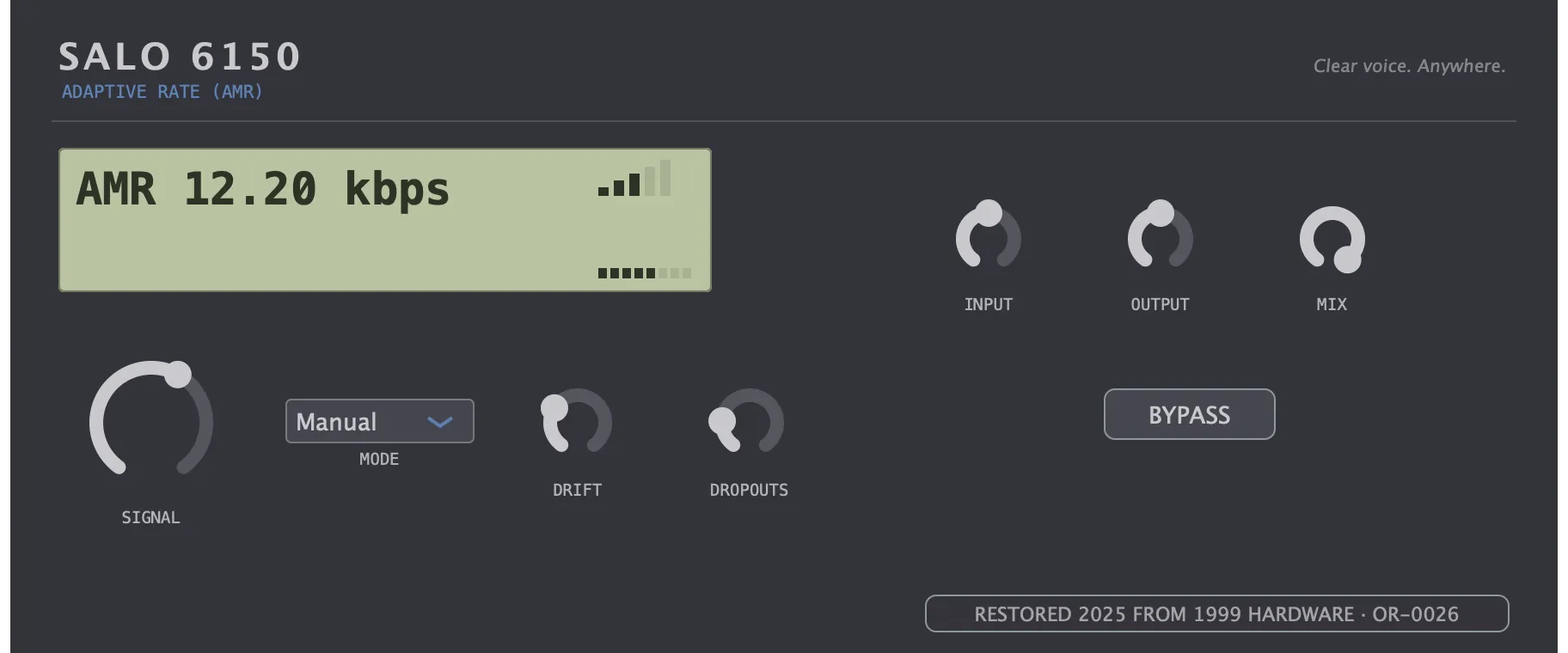
OR-0026
One knob labelled in signal bars.
OR-0027
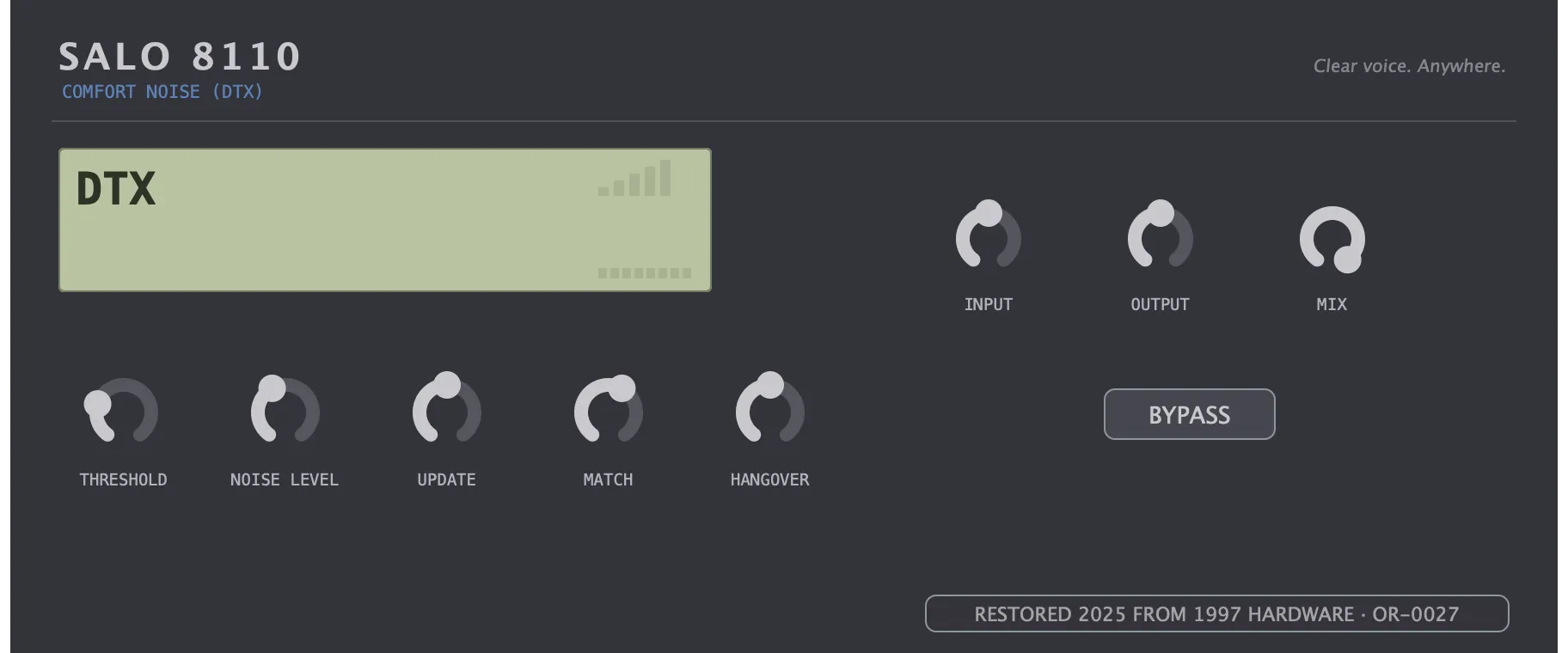
The eerie one.
OR-0028
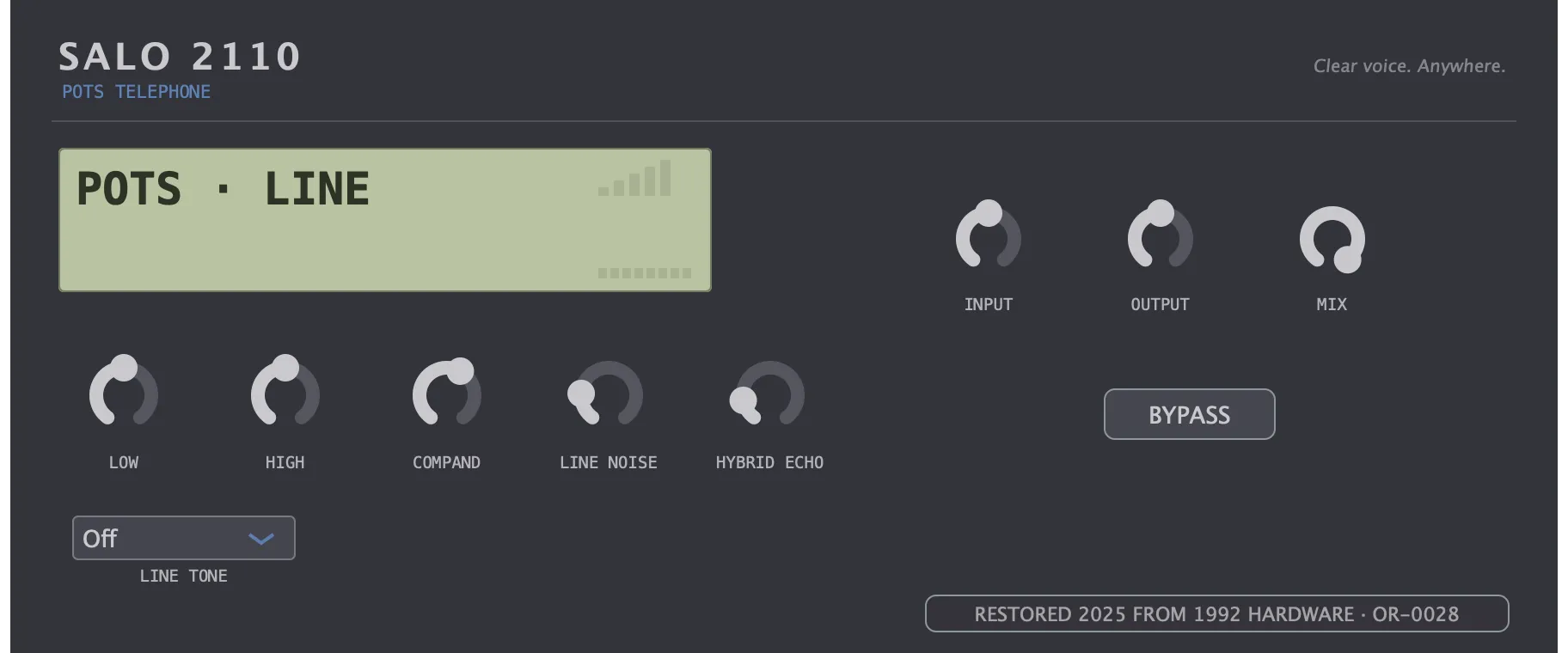
The landline anchor and the oldest voice in the house — narrowband, companded, with dial tone in its bones.
OR-0029
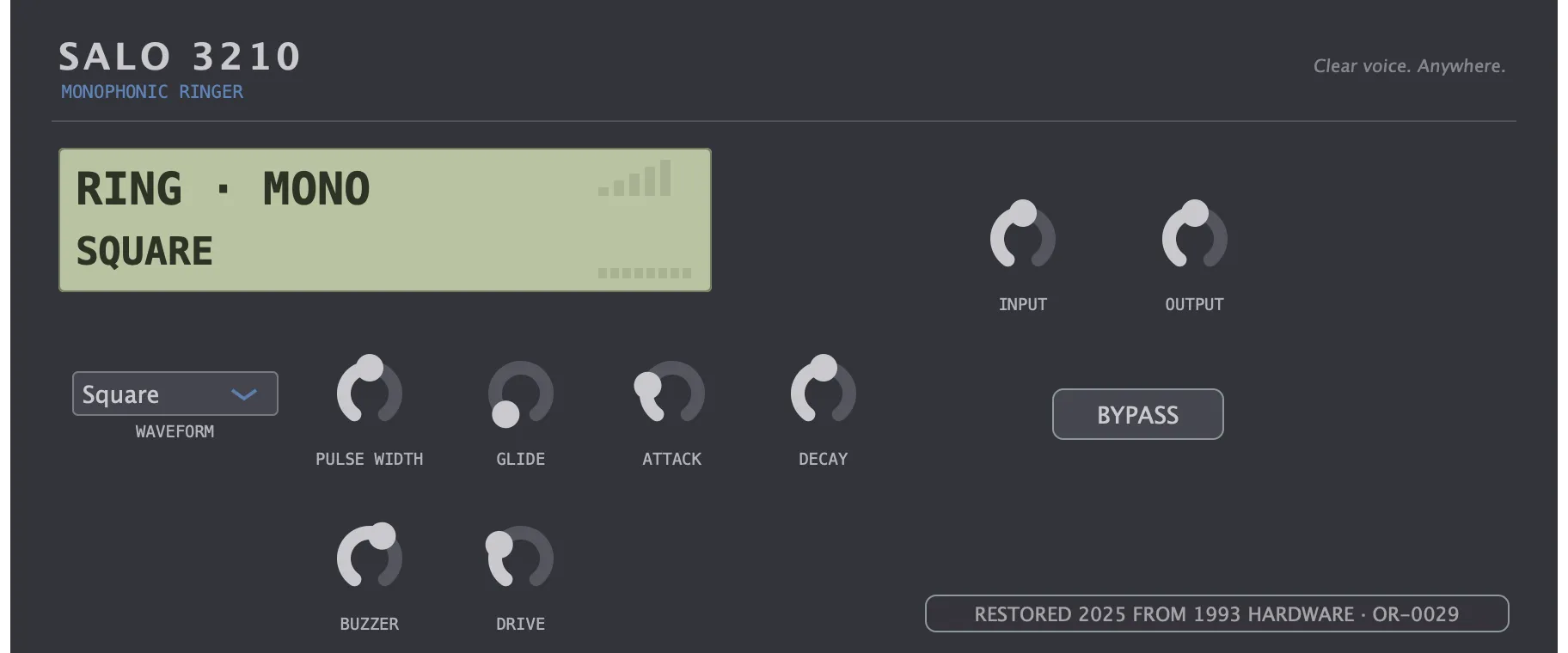
The pre-polyphonic ringtone: a single tinny voice picking out a melody through a piezo buzzer — the sound of a phone in 1994.
OR-0030
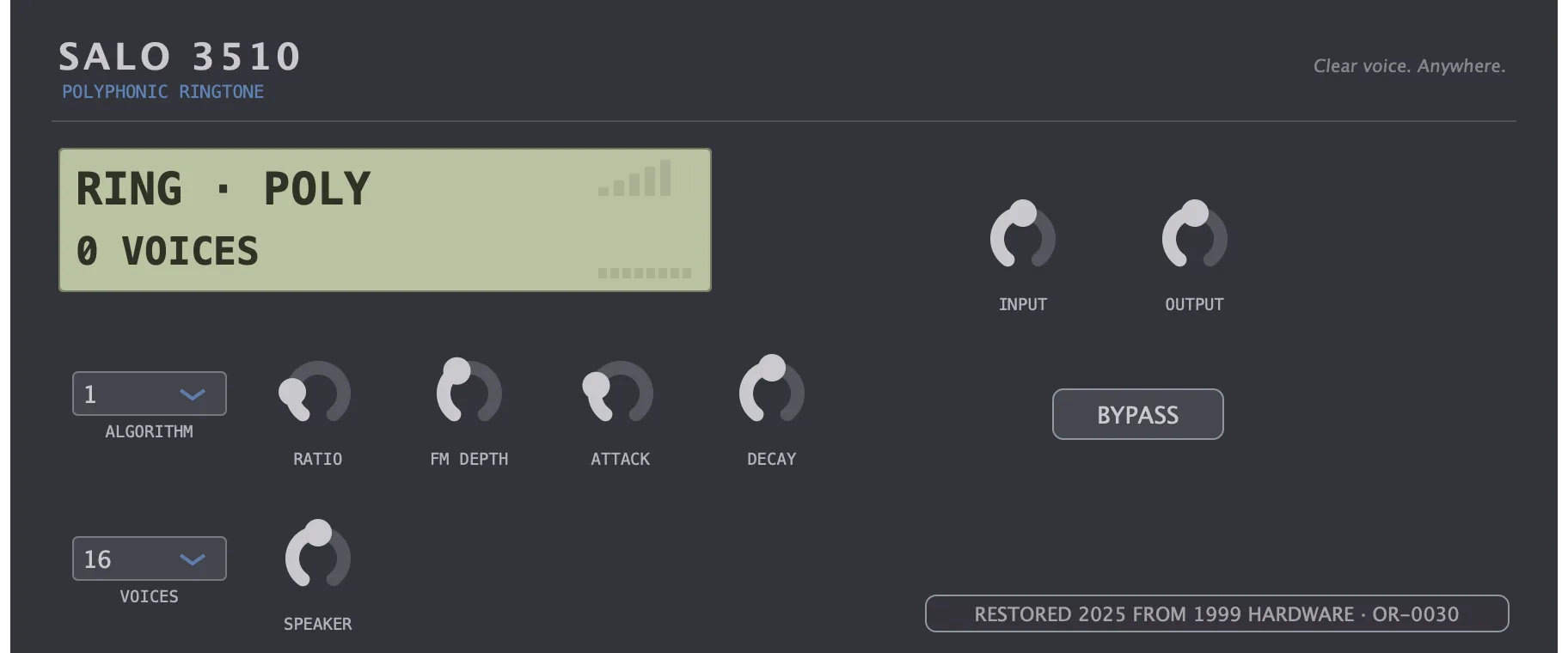
The next generation — a handful of cheap FM voices playing a MIDI-style ringtone through a slightly-better-but-still-tiny speaker.
OR-0031
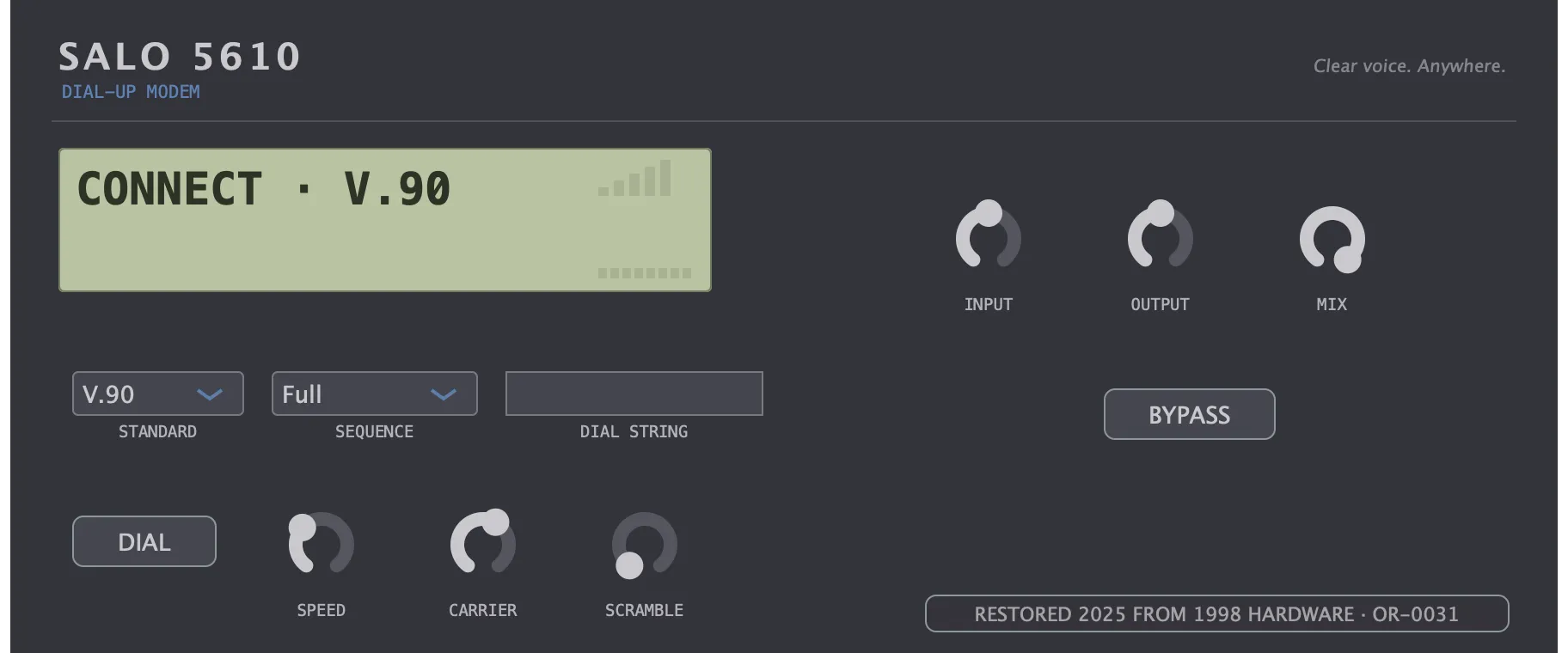
The sound of getting online: the dial, the carrier tones, and the scrambled training screech of a 56k handshake.
OR-0032
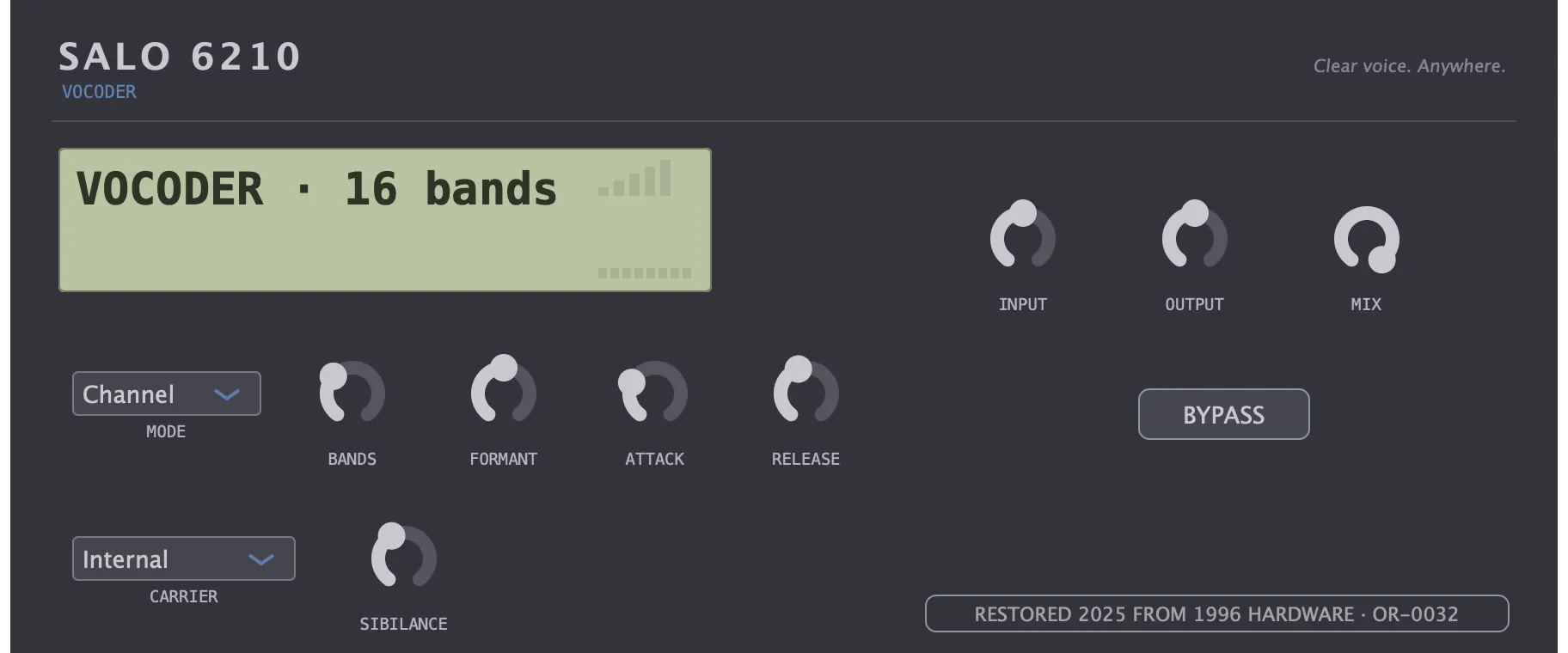
The classic robot voice, from the house that owned the codecs.
OR-0033
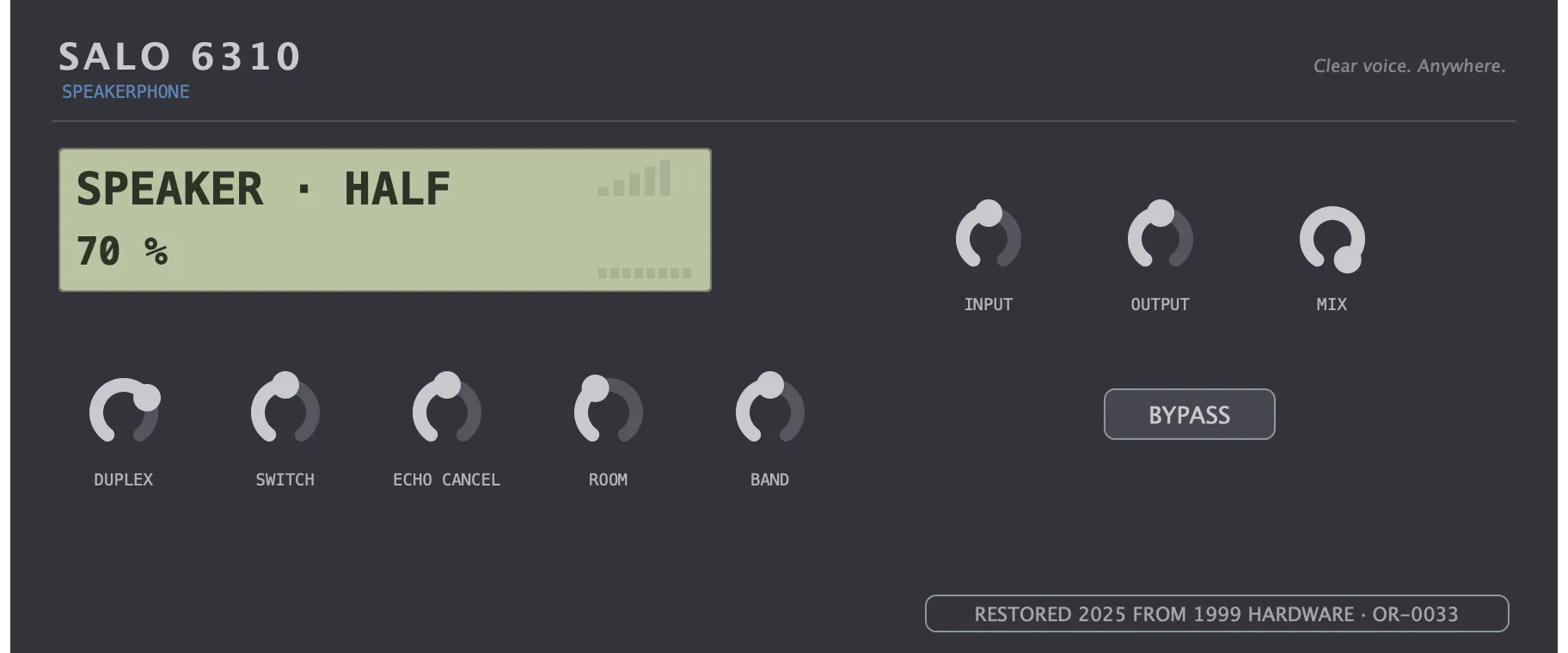
The half-duplex speakerphone: the pumping echo-canceller and the voice-switching that clips whoever's quieter when both people talk at once.
OR-0034
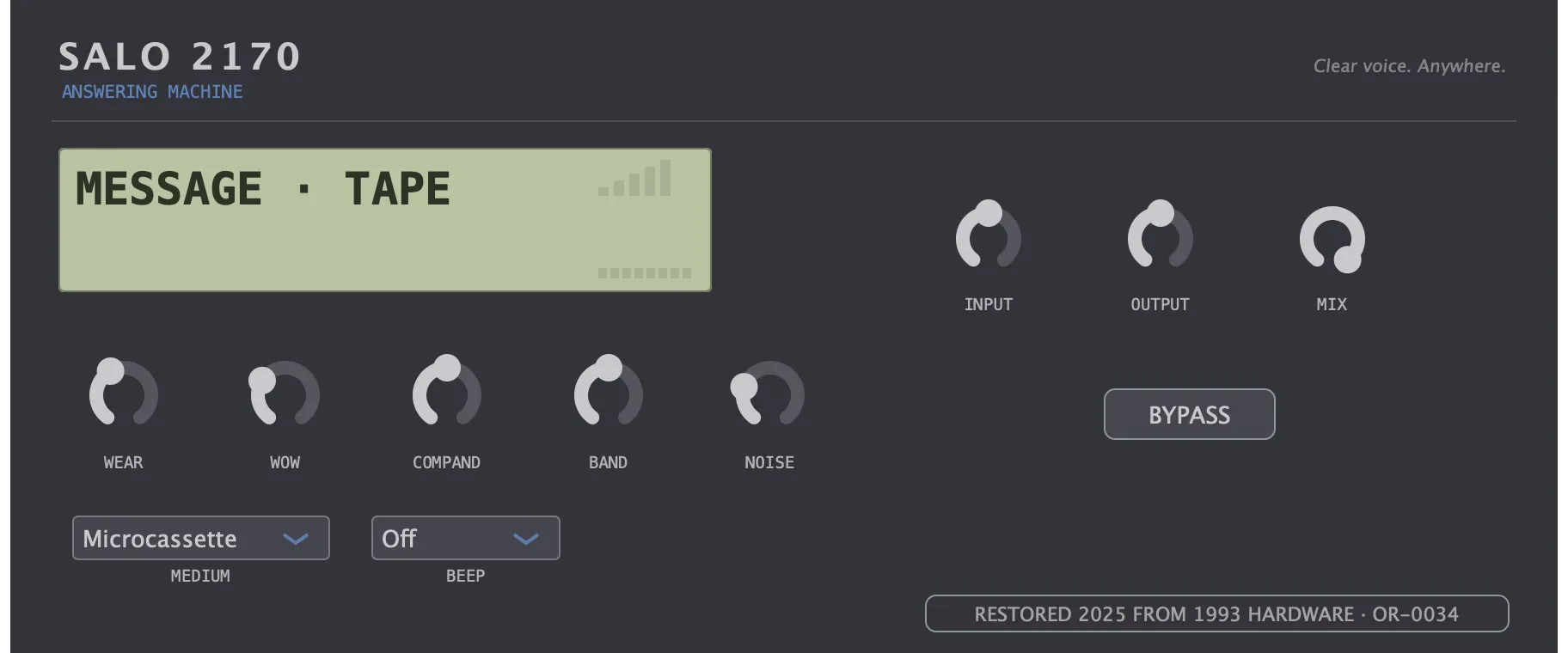
"You have one new message." Microcassette or early-digital voicemail grunge — narrowband, companded, and worn.
Tekura
Oregon, USA · 1979 – c. 2001
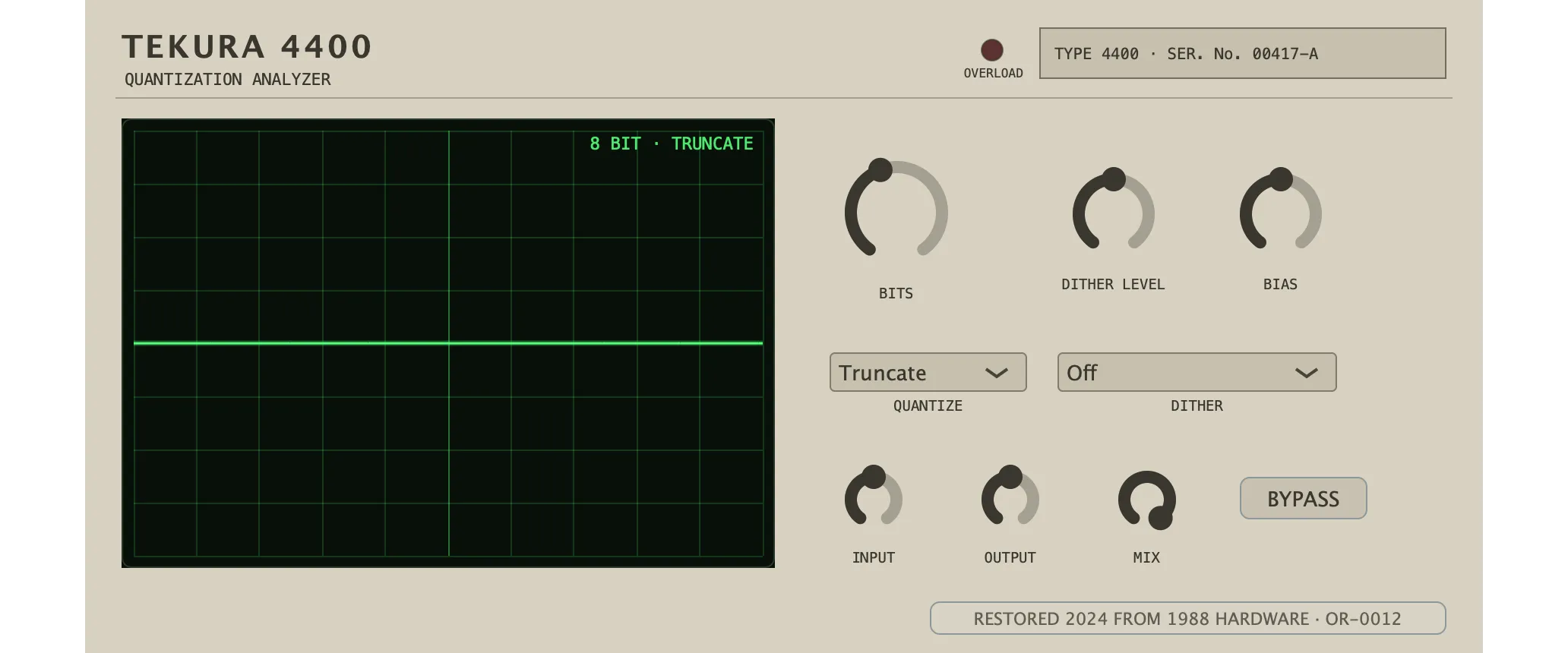
OR-0012
The bench standard for characterizing bit-depth error, reborn as the archive's cleanest destruction tool.
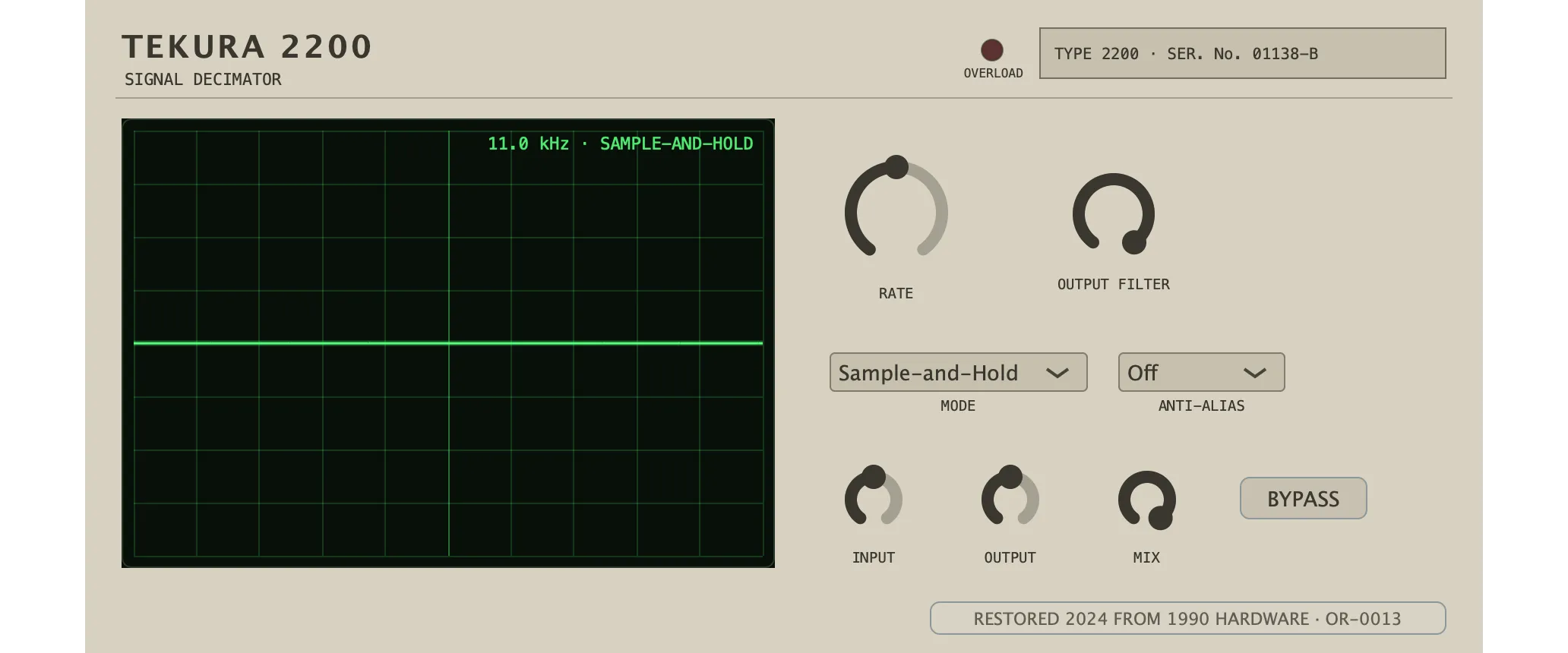
OR-0013
The sample-rate side of destruction, with the honesty an instrument demands: it lets you choose clean band-limited decimation or the aliased kind, deliberately.
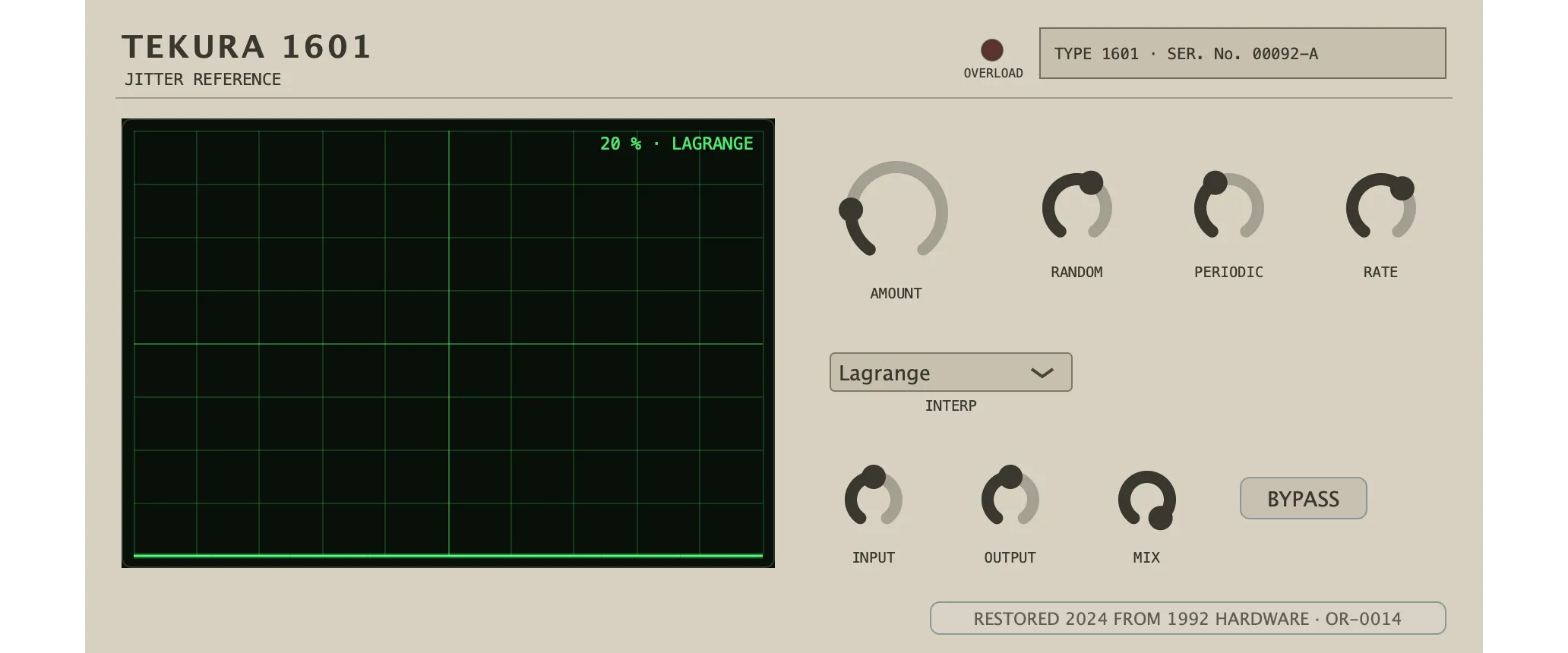
OR-0014
An instrument for injecting clock jitter in measured amounts — as an effect, a subtle, frequency-dependent smear and shimmer that most tools can't make.
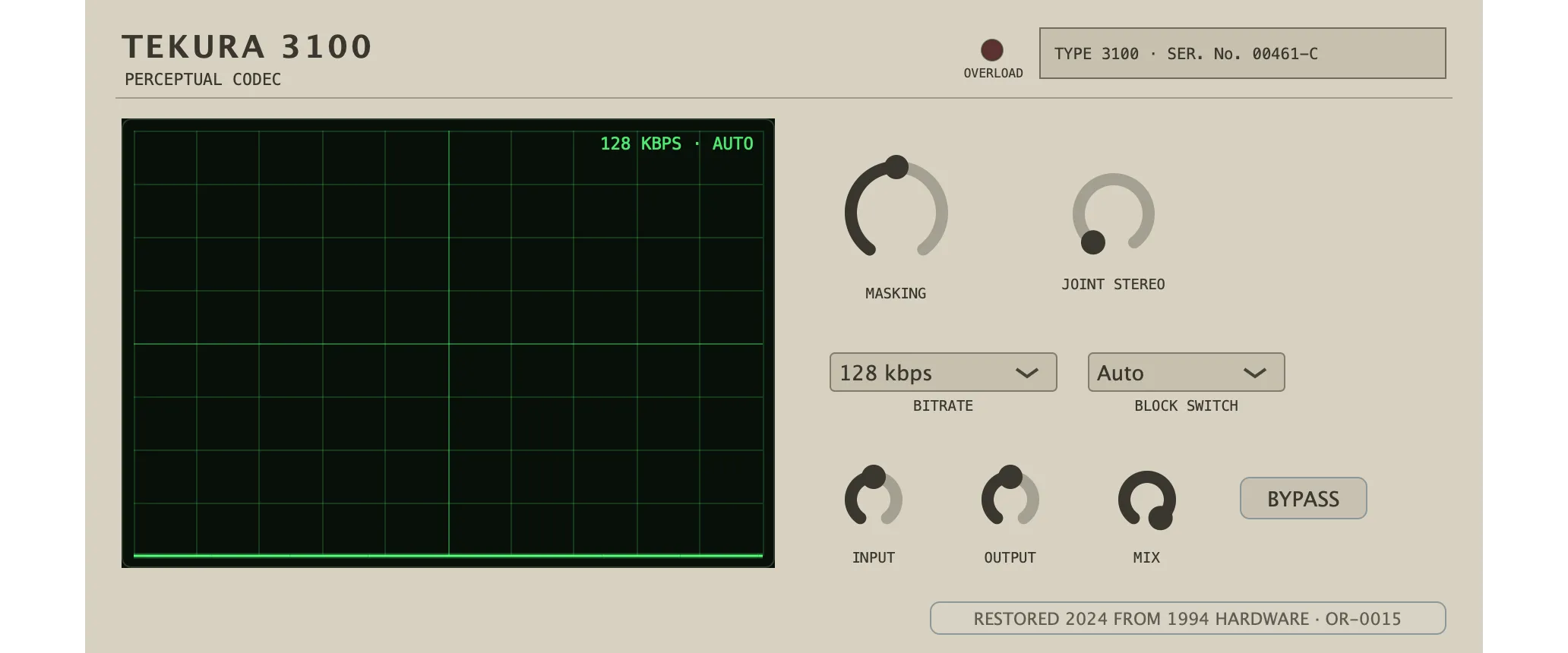
OR-0015
The lab's generic perceptual coder, with the masking model exposed on the panel — a measurement framing of the "lossy compression" sound, tunable from transparent to obviously crushed.
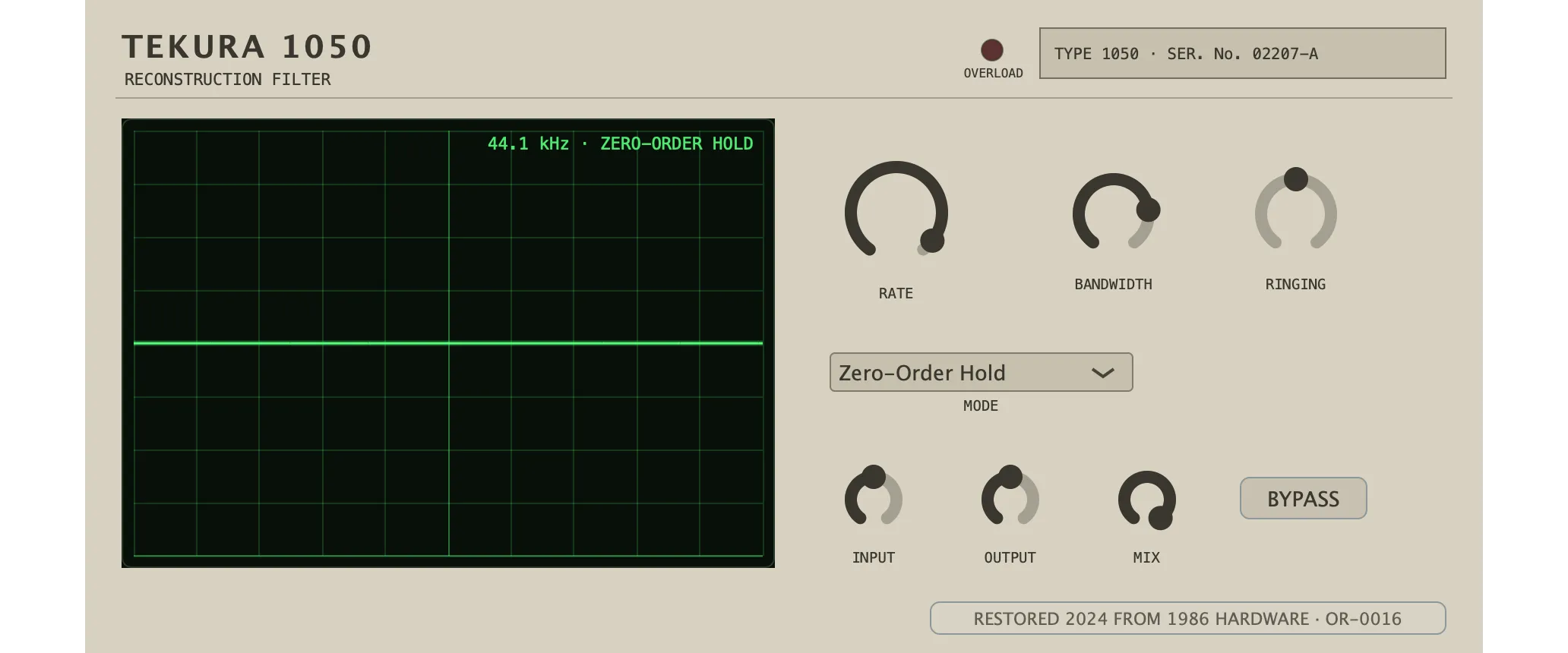
OR-0016
A converter's output stage on its own: choose how the samples become sound.
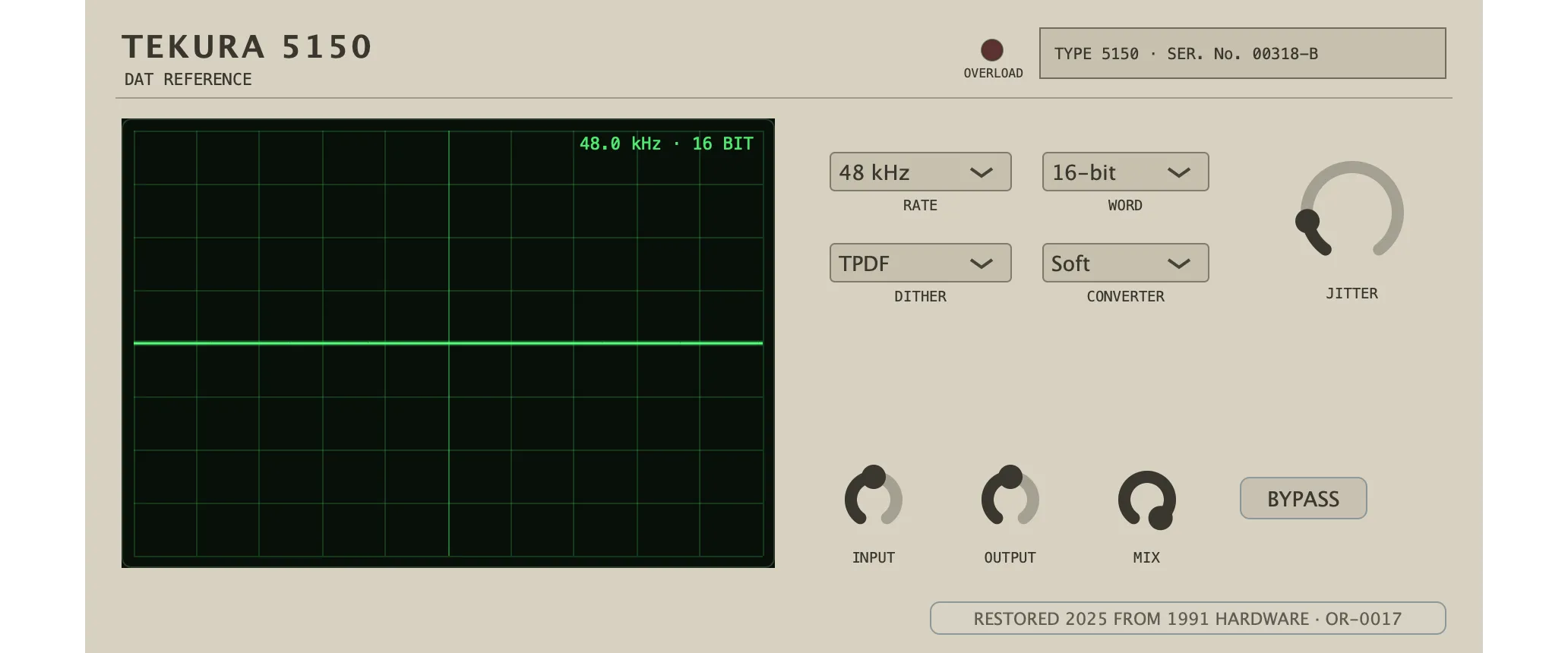
OR-0017
The clinical companion to Yumeo's consumer DAT: 16-bit that is almost, but not quite, clean.
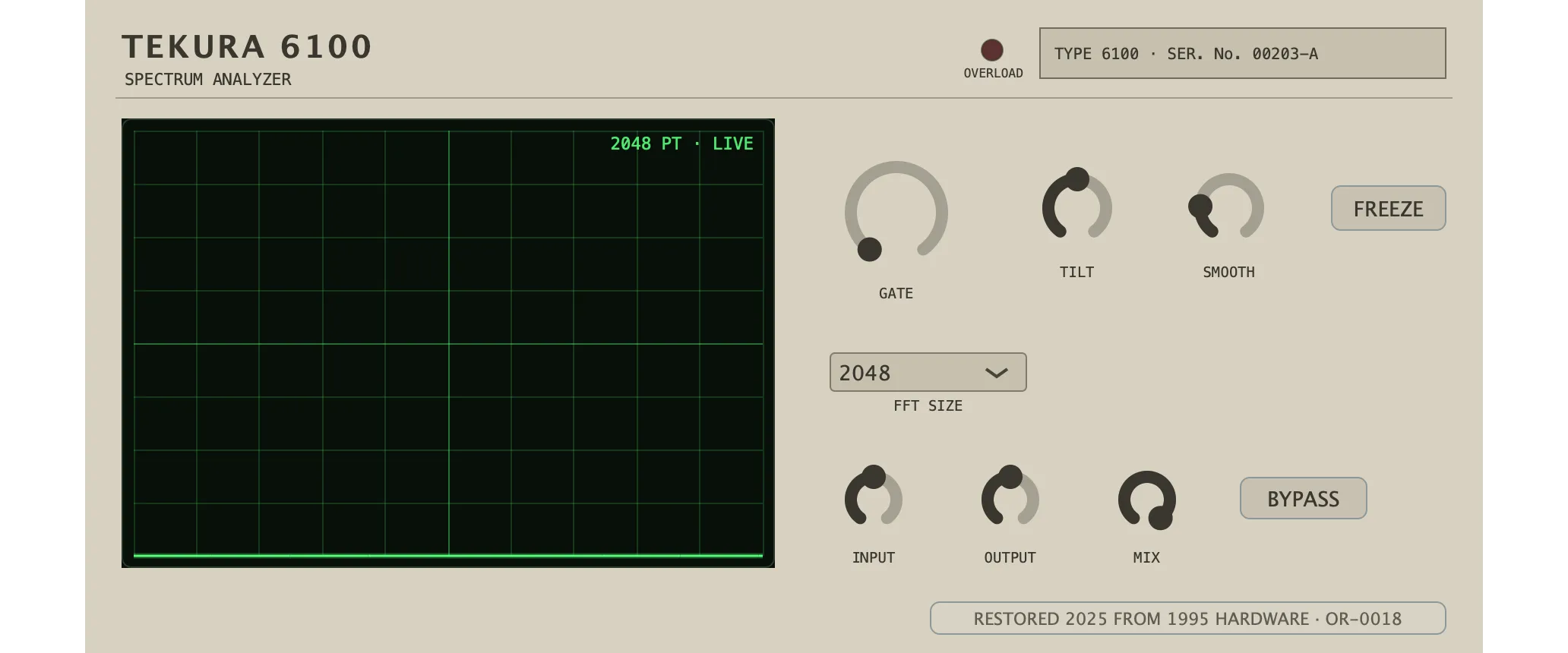
OR-0018
The real-time spectrum bench, turned into a spectral processor.
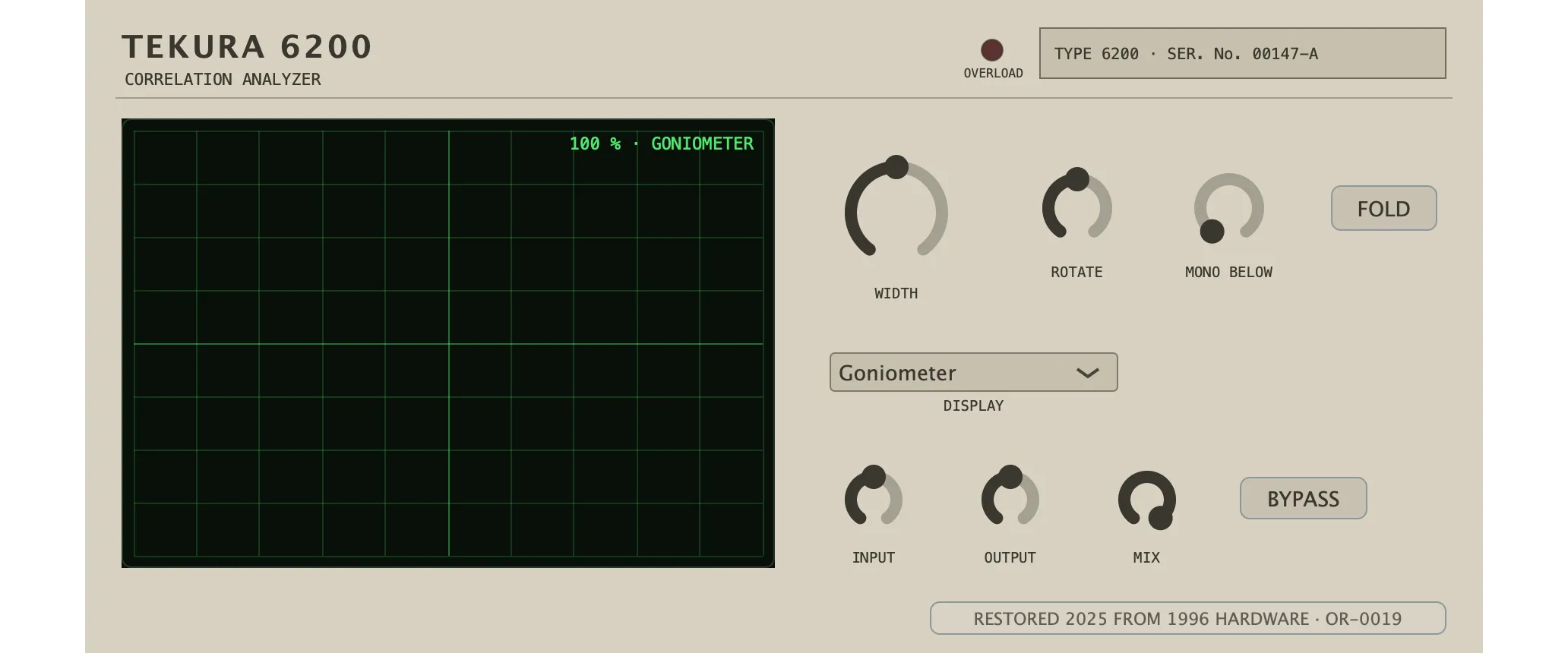
OR-0019
The goniometer and phase meter, plus the stereo tools that measurement implies.
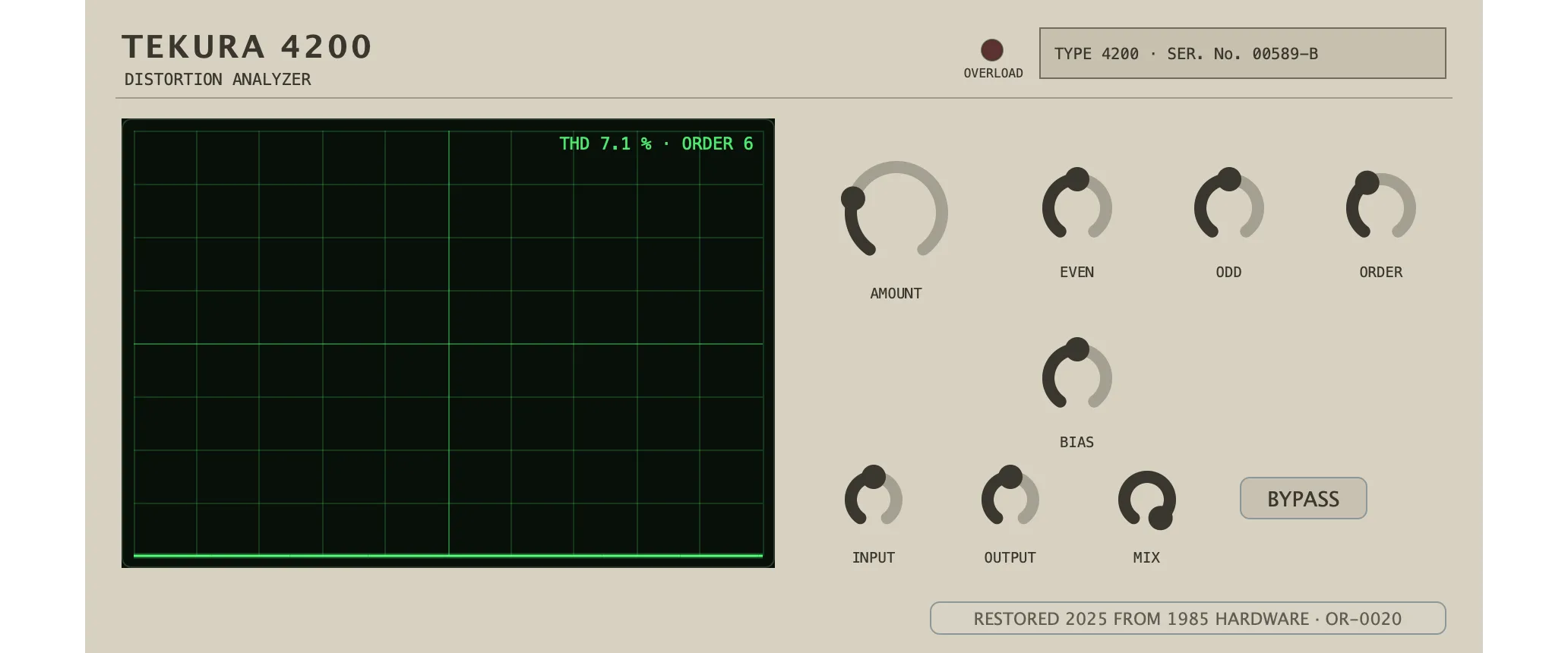
OR-0020
A THD reference that adds exactly the harmonics you dial — measured distortion as a precise, clean harmonic generator.
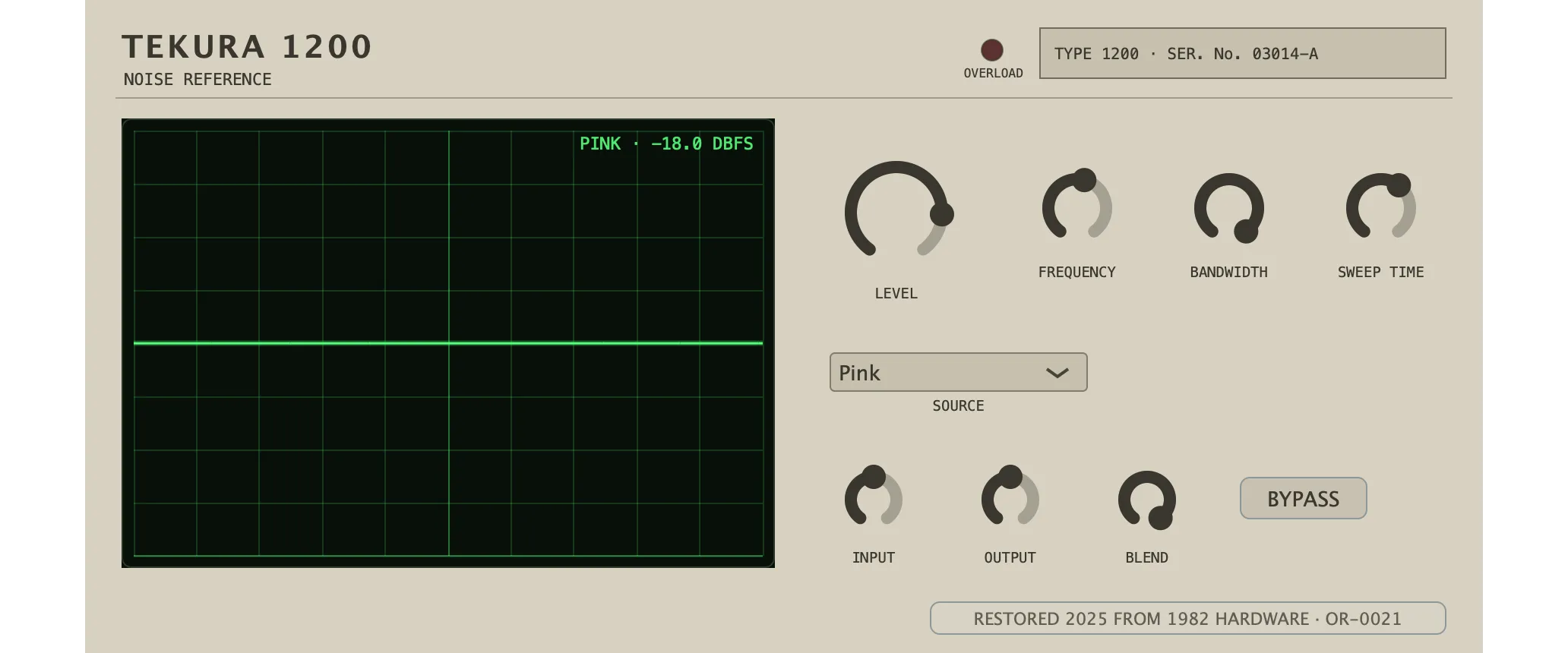
OR-0021
The lab's calibrated source: white, pink, and band-limited noise at exact levels, plus test tones and correct dither.
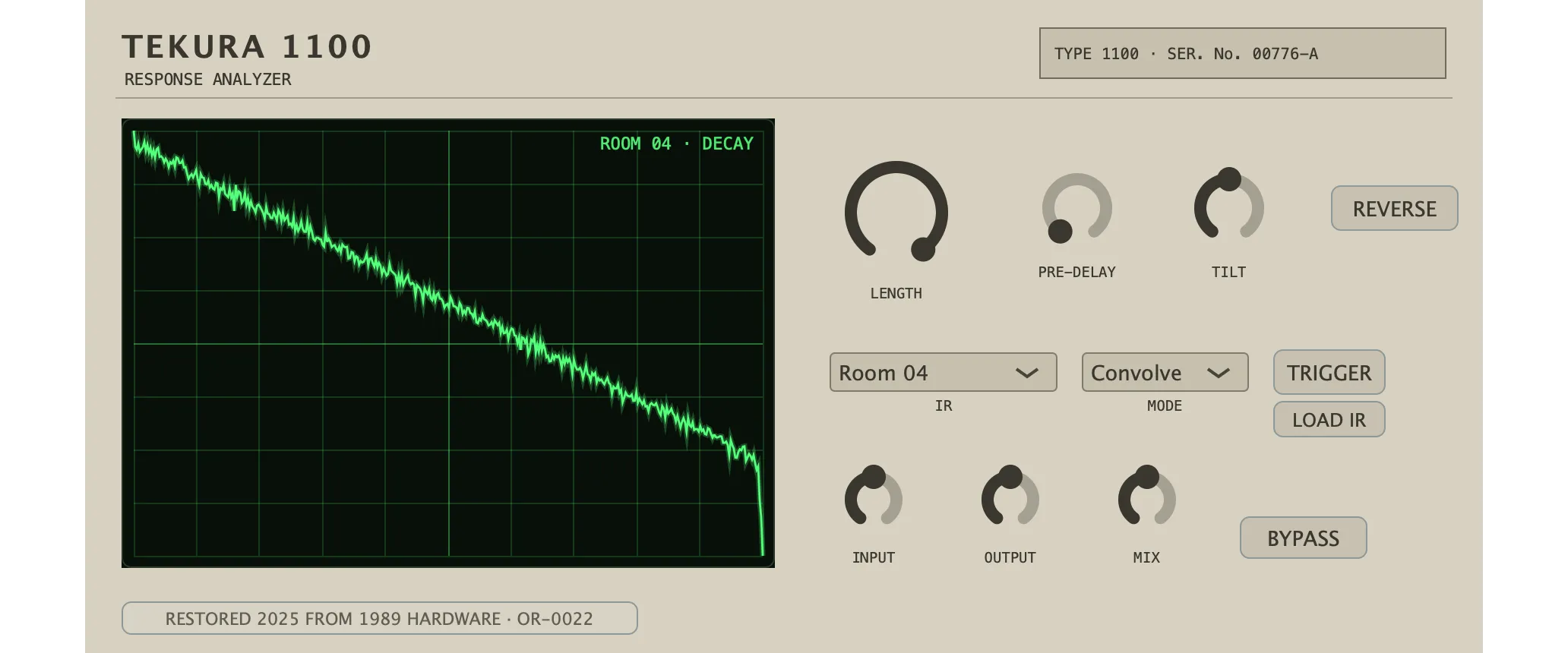
OR-0022
The swept-sine rig that measures a system's impulse response — and then lets you play through it.
Yumeo
Japan · 1985 – c. 2005
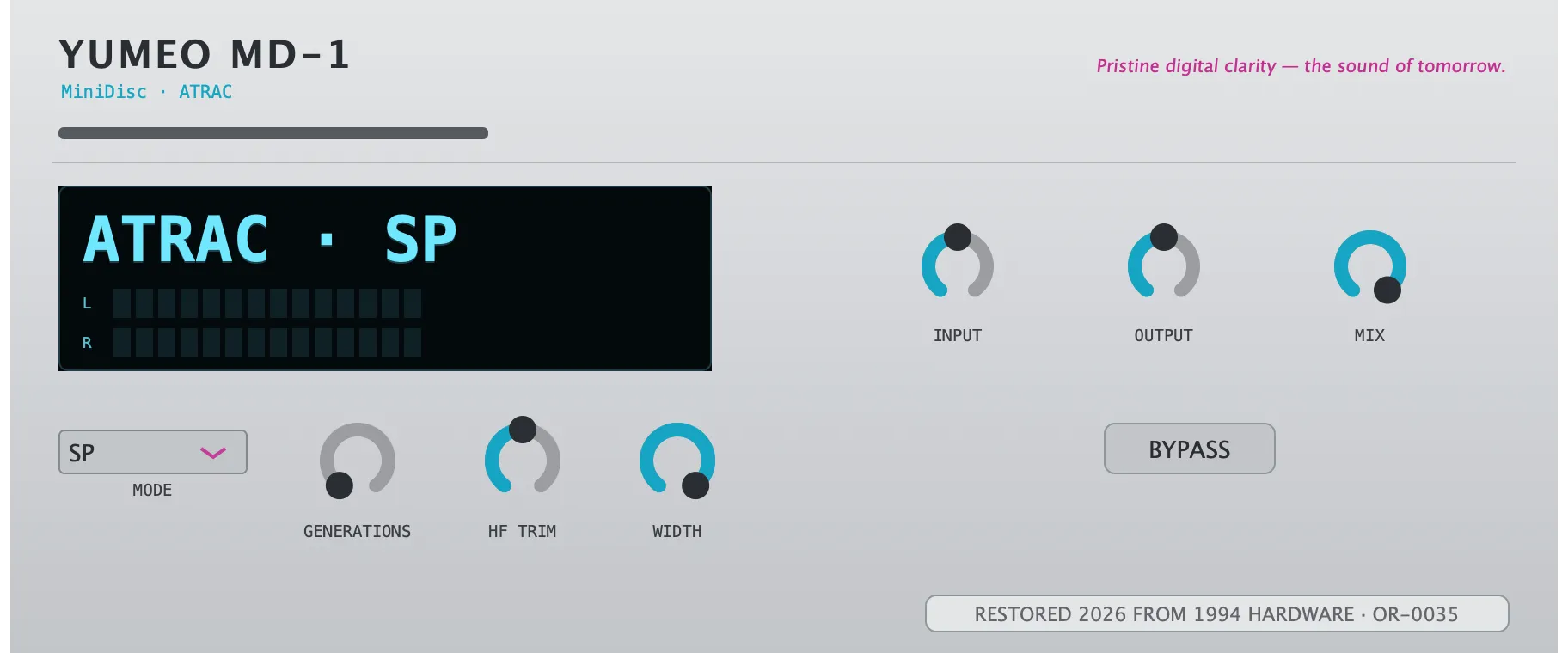
OR-0035
The flagship, and the sound of a generation's first "perfect" digital recorder: the gentle transient-softening and stereo-narrowing of ATRAC.
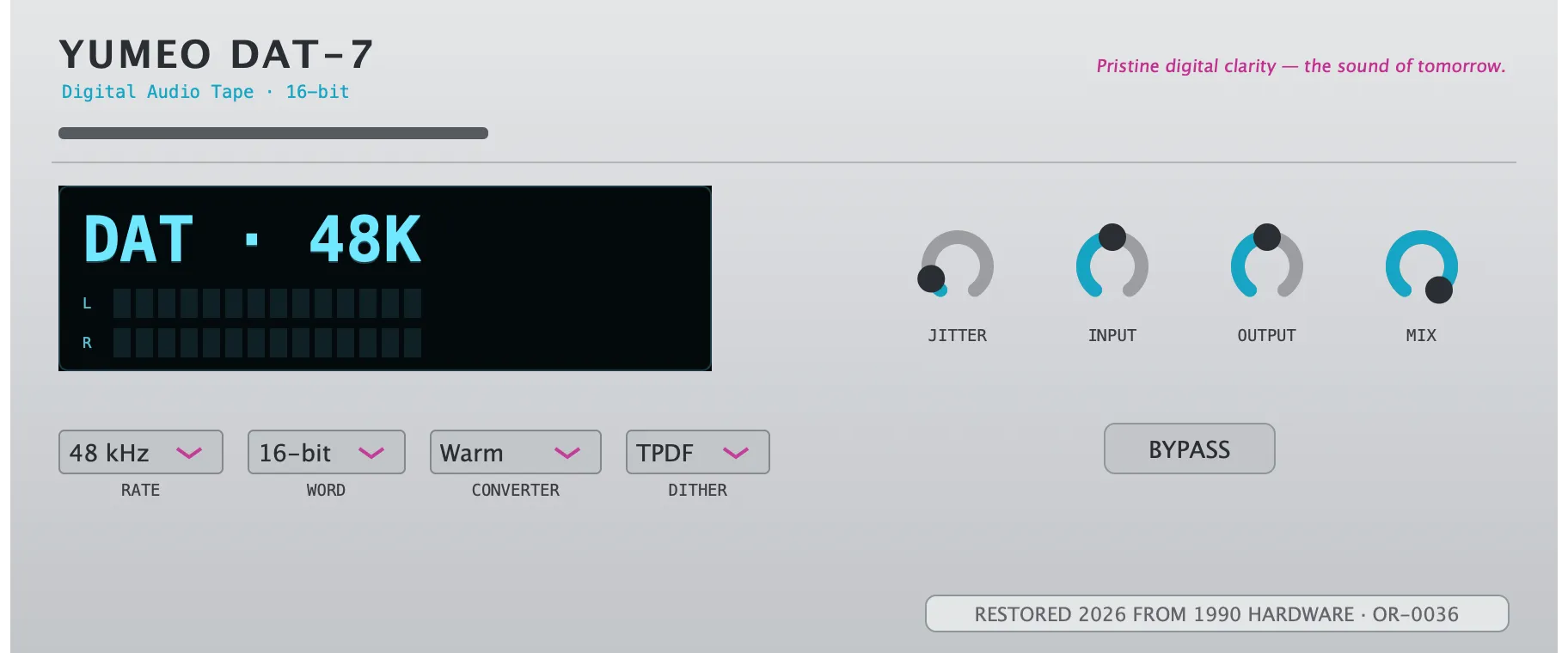
OR-0036
The consumer DAT deck — pro-adjacent 16-bit, but voiced for the living room, and distinct from Tekura's laboratory reference.
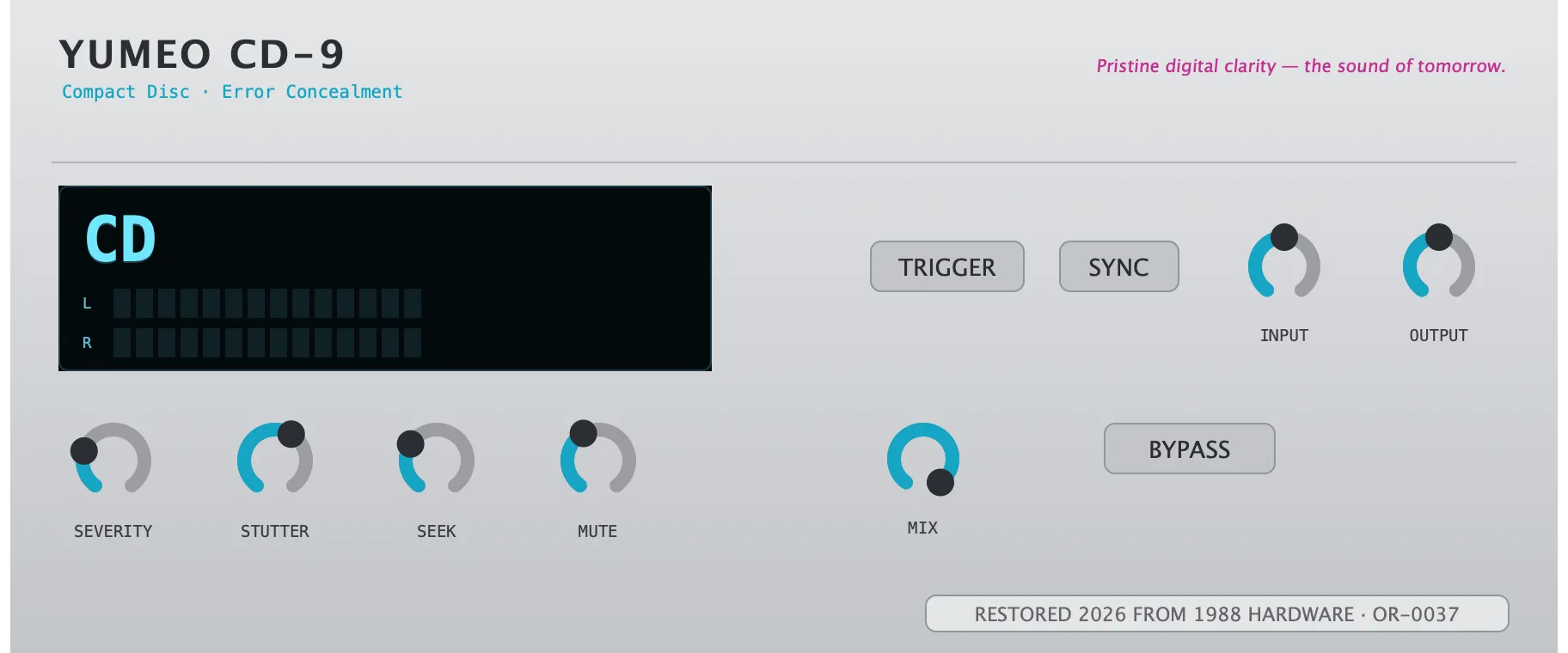
OR-0037
A failing compact disc: the interpolation, the brief digital silences, and above all the stutter as the disc gives up.
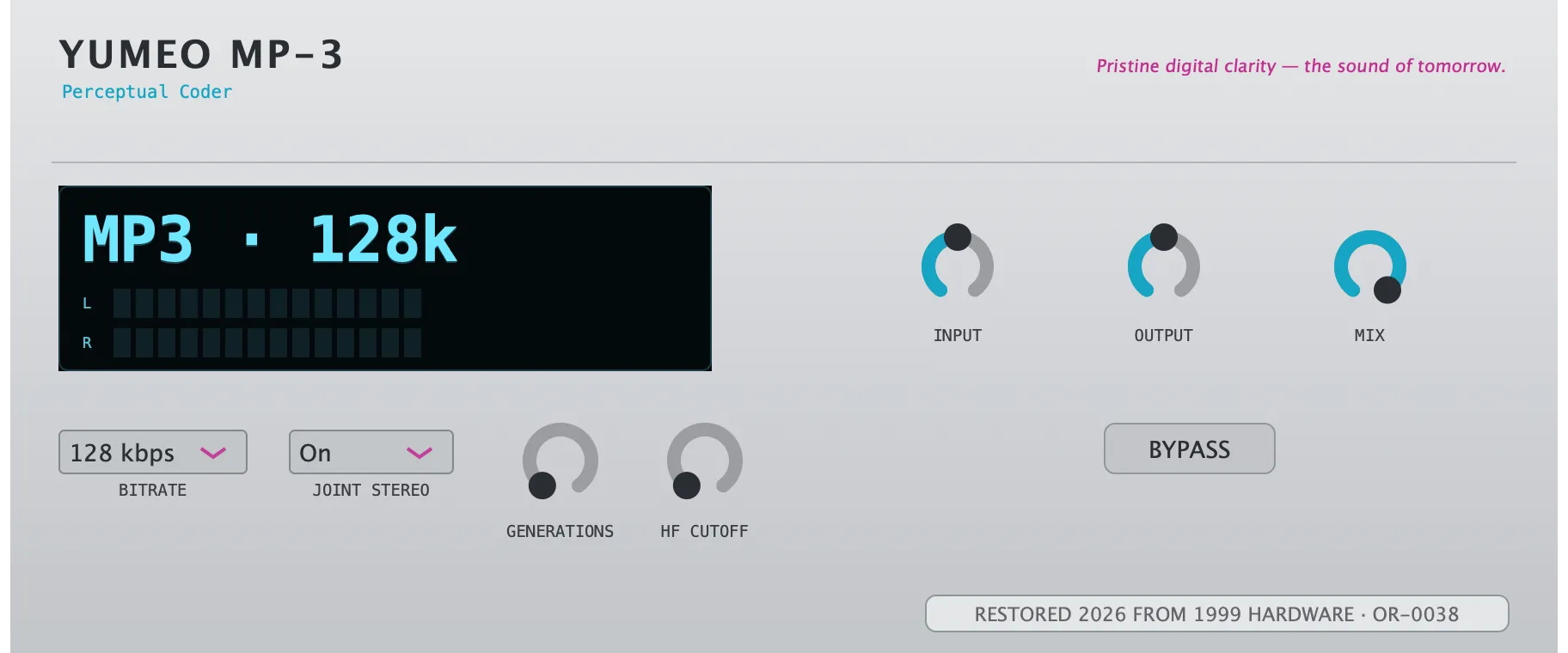
OR-0038
The specific sound of a low-bitrate MP3 from the file-sharing era: swirling cymbals, joint-stereo collapse, and pre-echo.
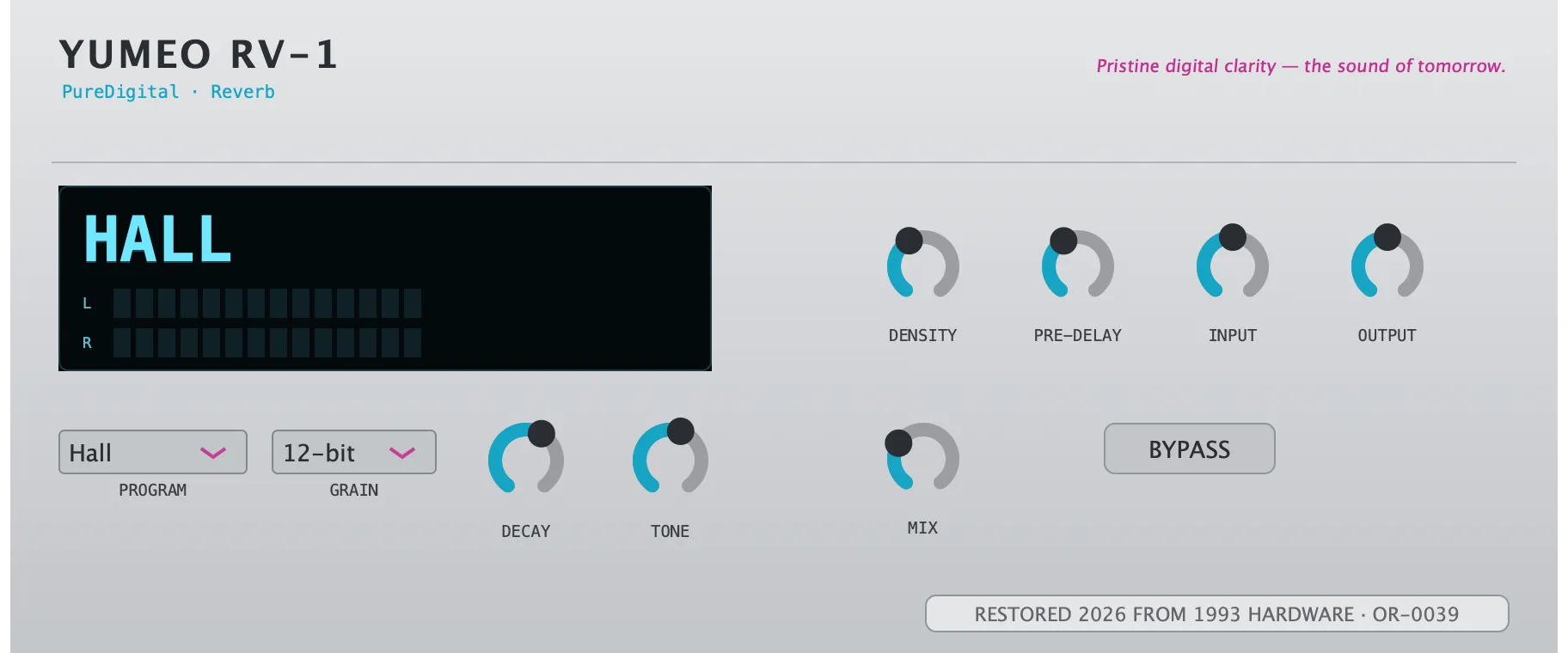
OR-0039
The reverb baked into a consumer deck's DSP chip: short, metallic, sparse — the unglamorous "grit era" of digital reverb, and a lovely lo-fi space.
OR-0040
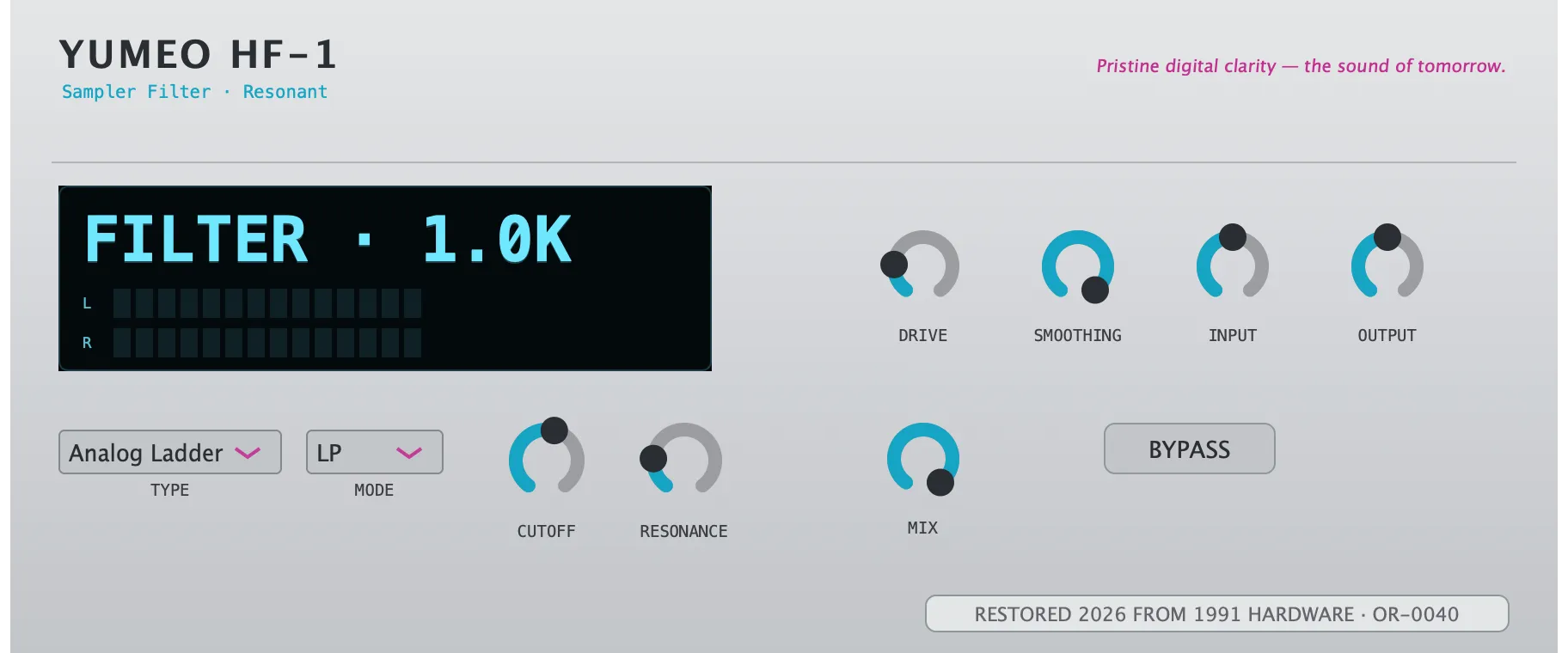
The onboard filter character of a consumer digital instrument — either smooth analog warmth or the zippering of an early digital IIR, your choice.
OR-0041
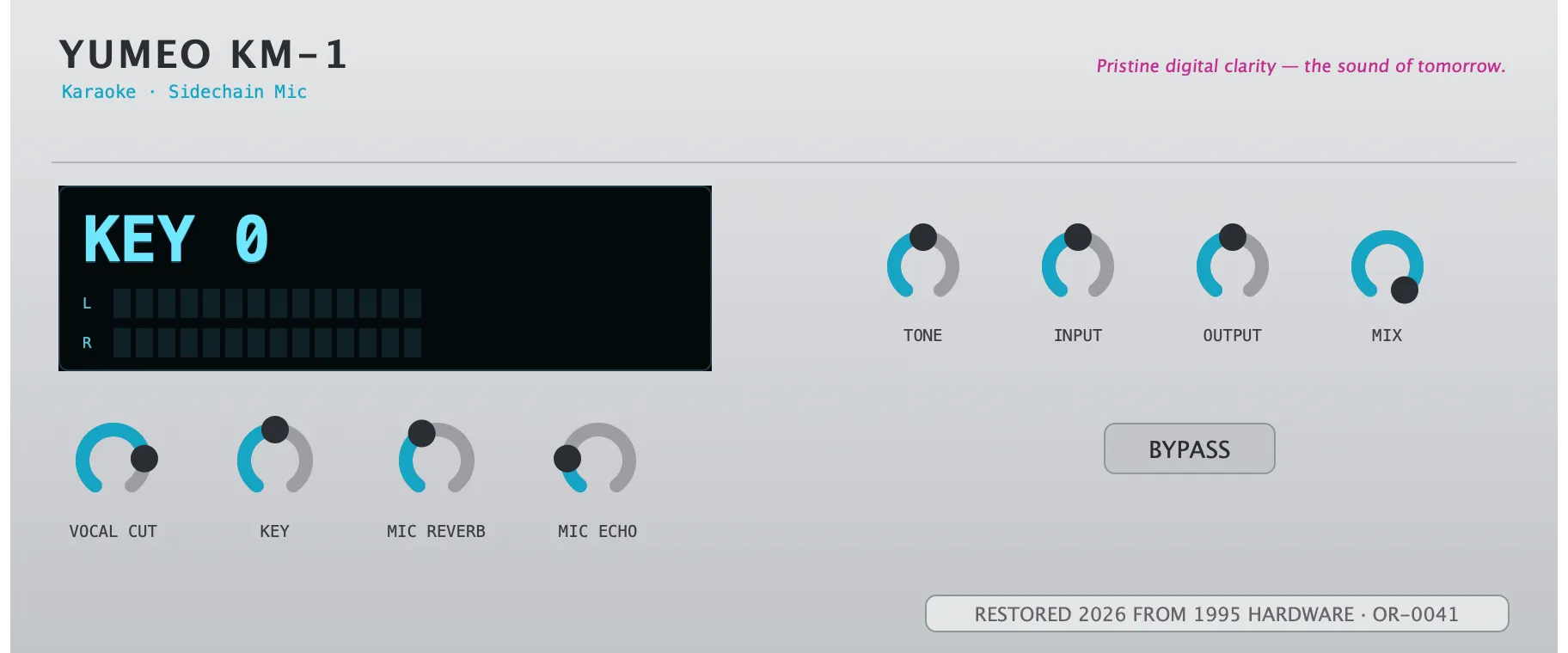
The living-room karaoke deck: pull the lead vocal out of a record, drench a microphone in splashy reverb, and shift the key to fit your range.
OR-0042
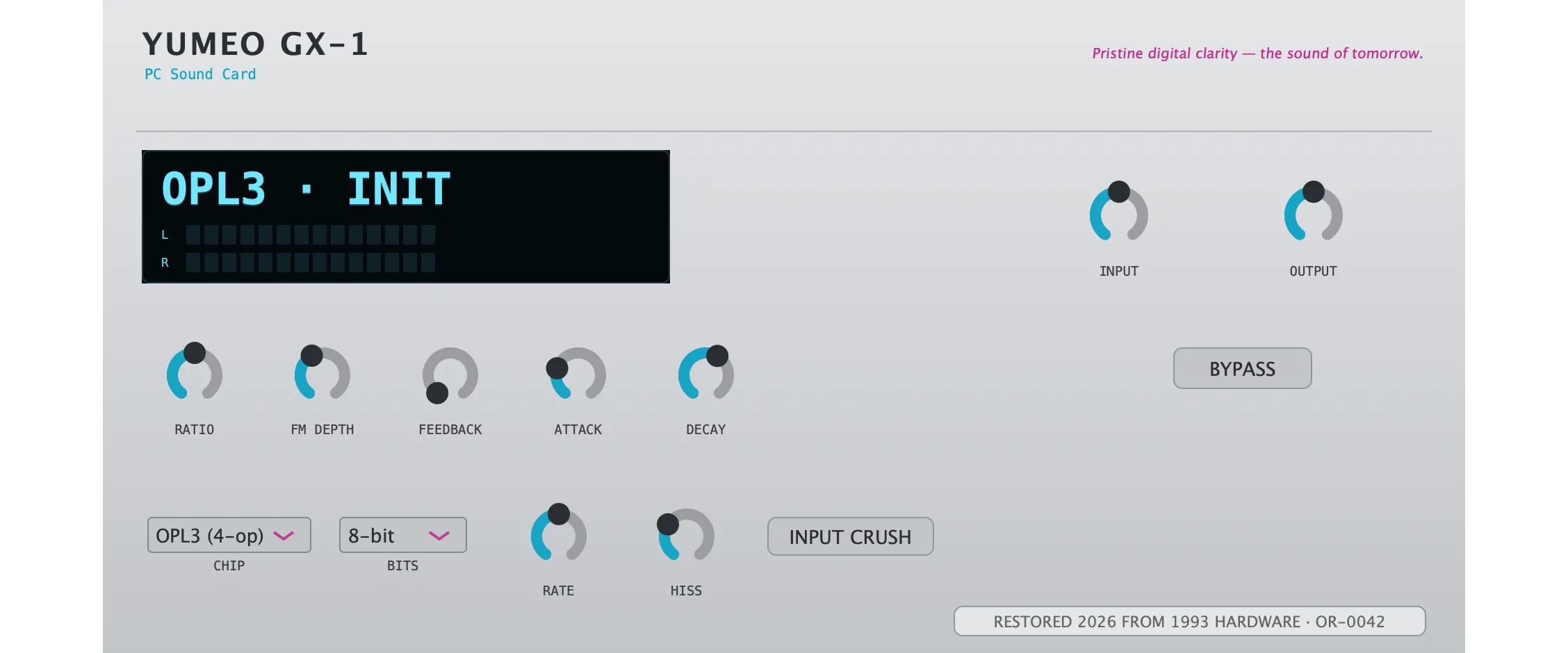
The DOS-game sound card: OPL FM synthesis and a gritty 8-bit sample DAC.
OR-0043
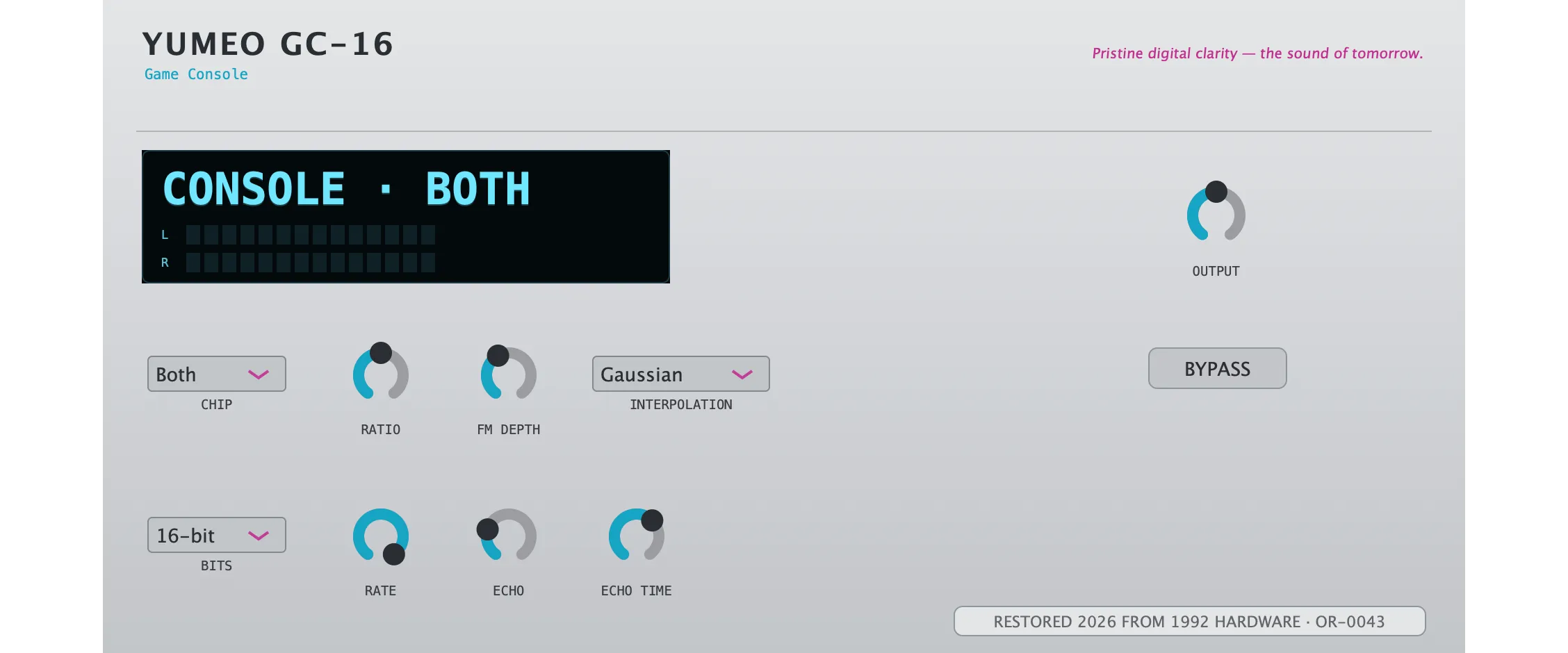
The 16-bit console chip: FM-plus-sample voices with the specific bit-depth, rate, and built-in echo of the era's game hardware.
OR-0044
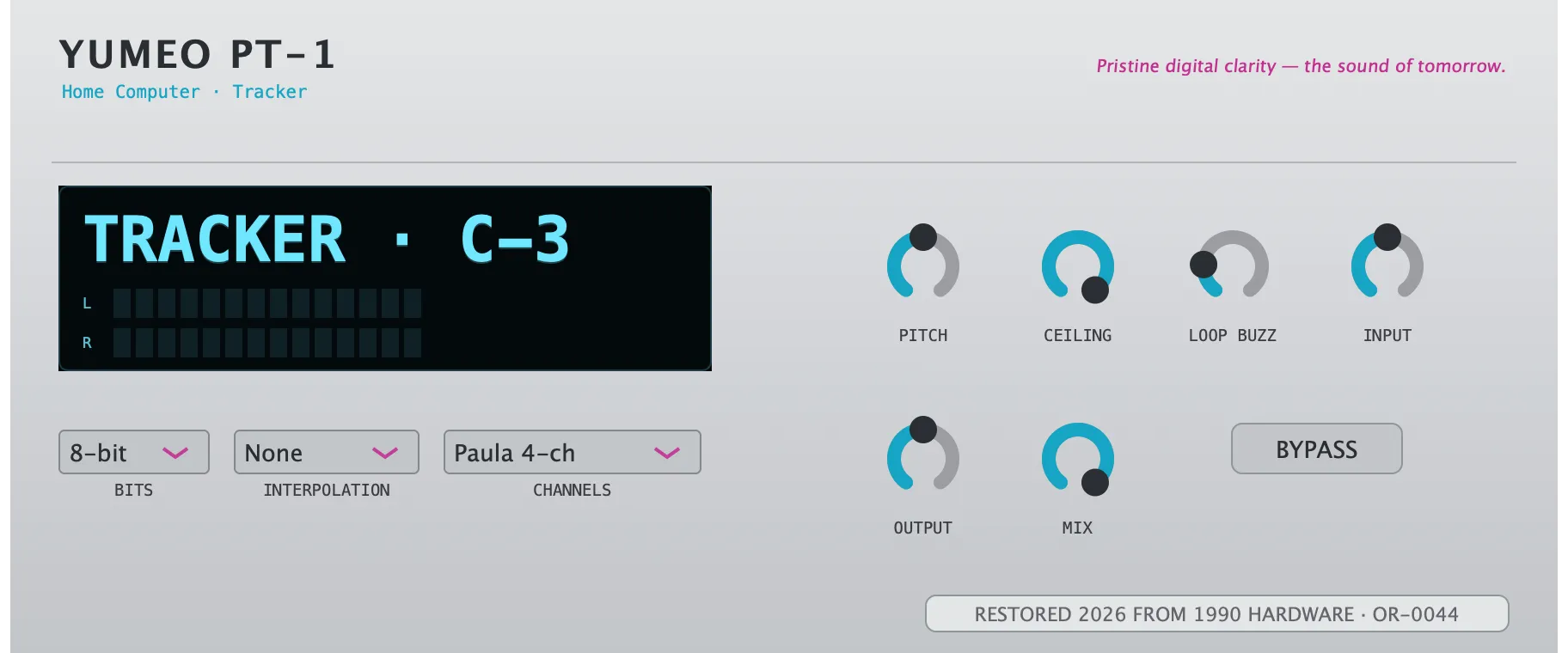
The demoscene machine: 8-bit sample playback resampled hard off its root, four voices, and the buzzy click of a mismatched loop point.
Halvyn
United Kingdom · 1983 – c. 2008
OR-0001
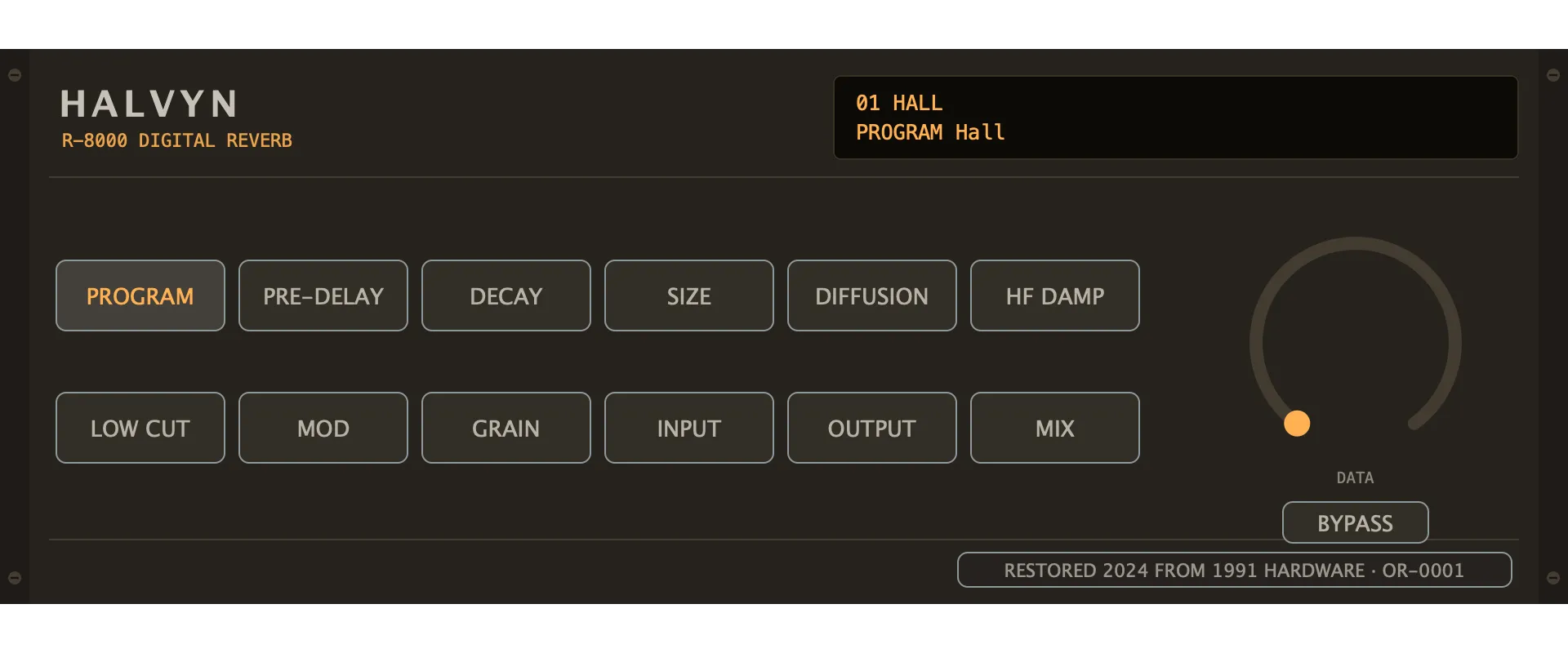
The unit that started Orrery — the reverb Iver Sandholm rebuilt board by board.
OR-0002
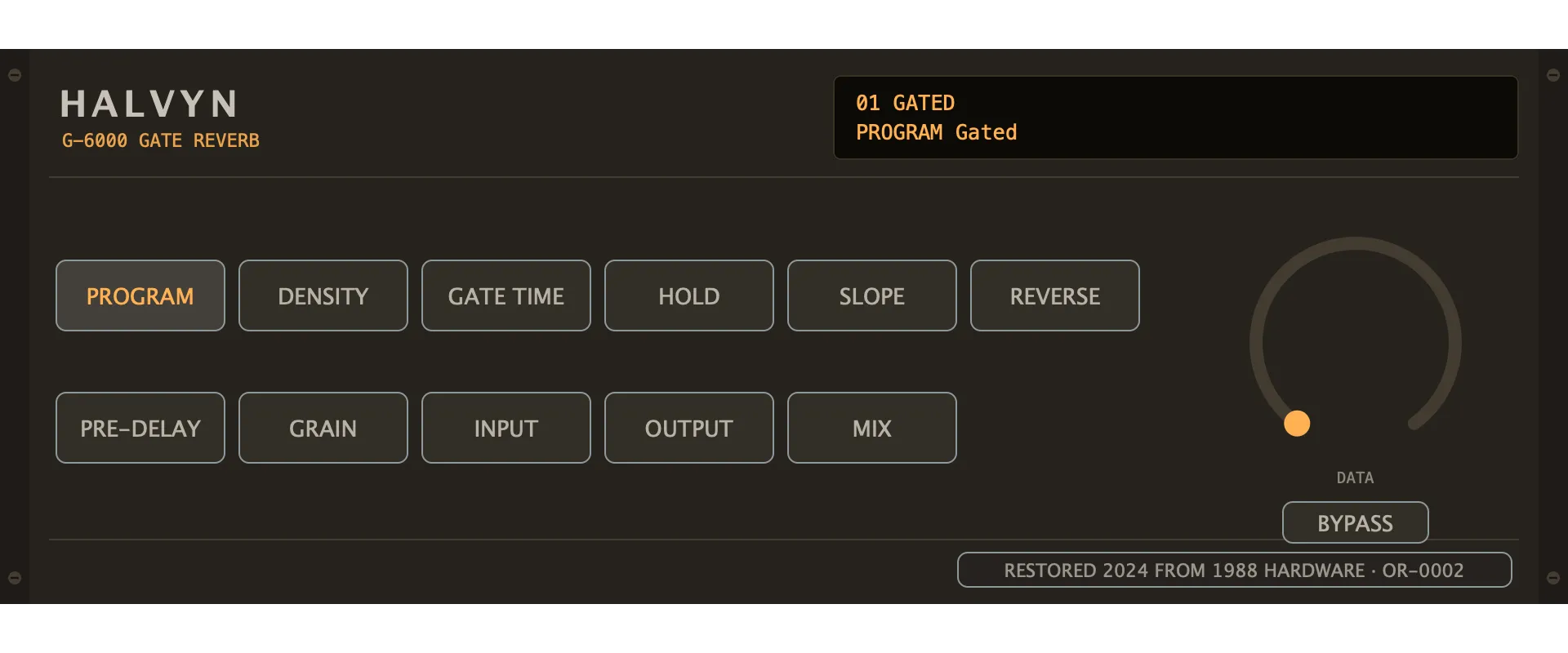
The iconic truncated-tail sound — the dense burst that stops dead — plus its reverse.
OR-0003
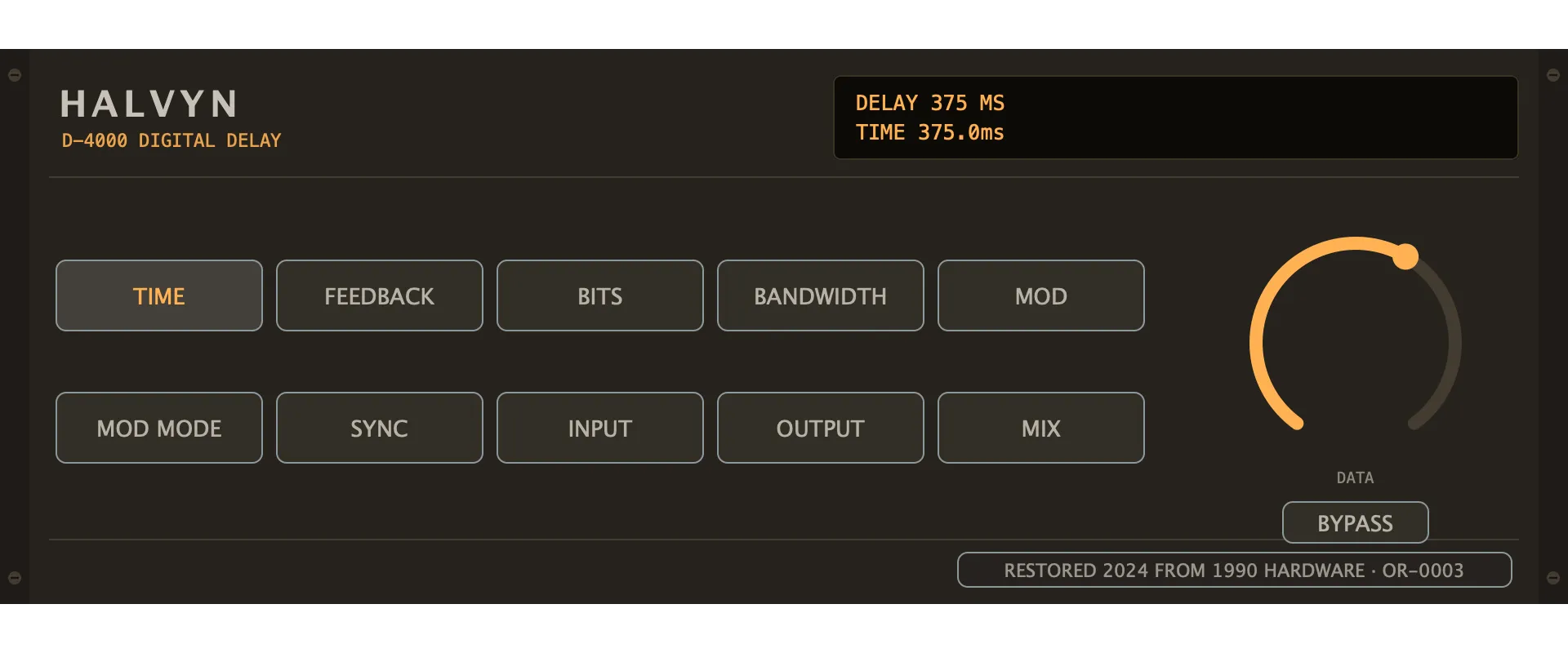
Clean-ish repeats that degrade in steps — the digital counterpart to tape, where each pass loses resolution in quantized increments rather than a smooth rolloff.
OR-0004
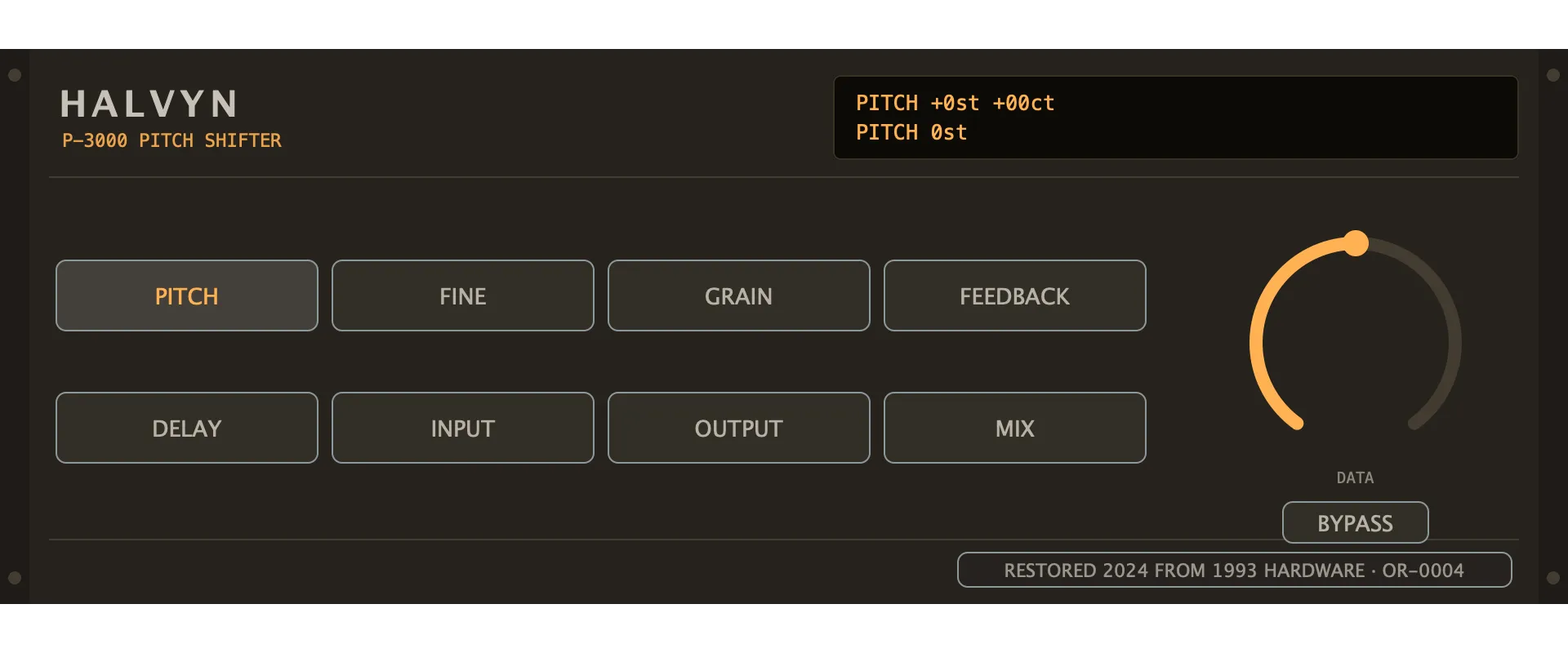
Warbly, formant-broken hardware pitch shifting — great for detune, thick doubles, and deliberate breakage; not a clean modern shifter, on purpose.
OR-0005
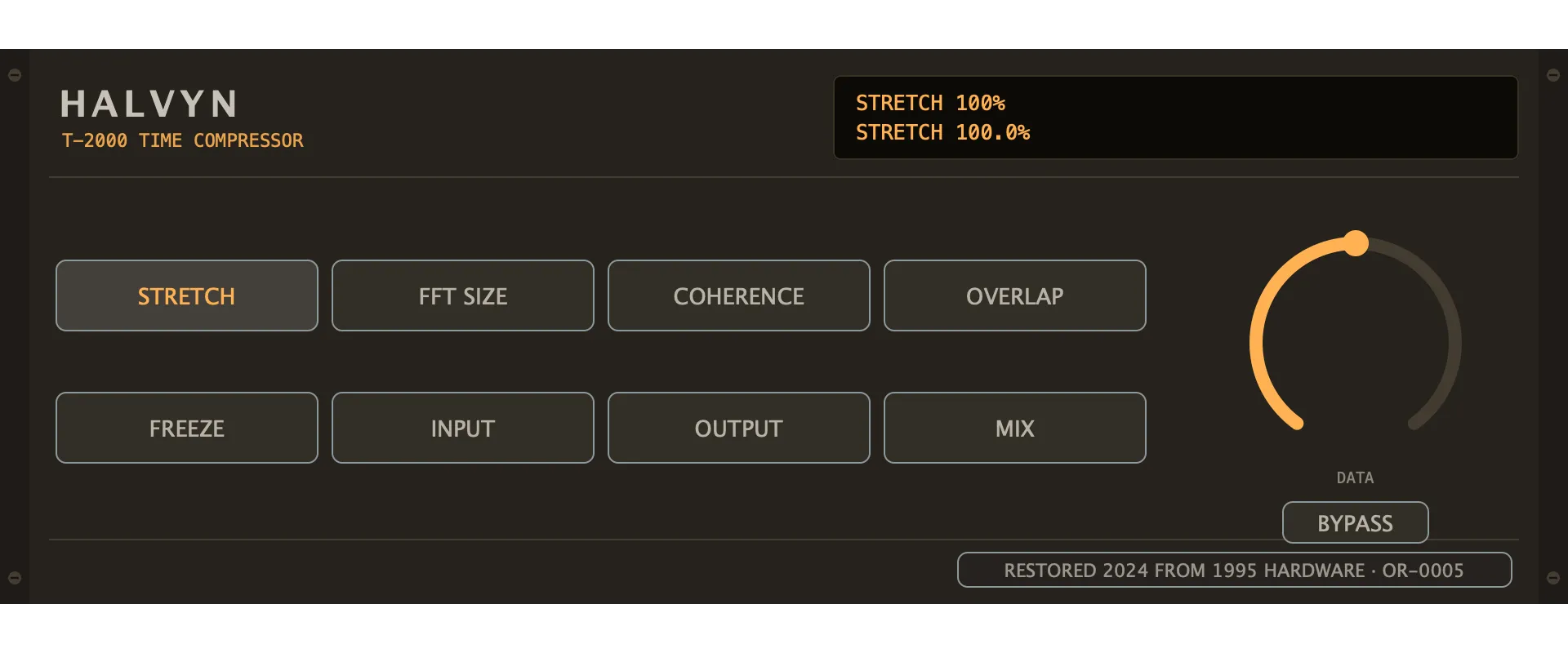
Early time-stretching pushed past its limits — the smeared, underwater, spectral-glass texture, and a freeze that becomes a drone engine.
OR-0006
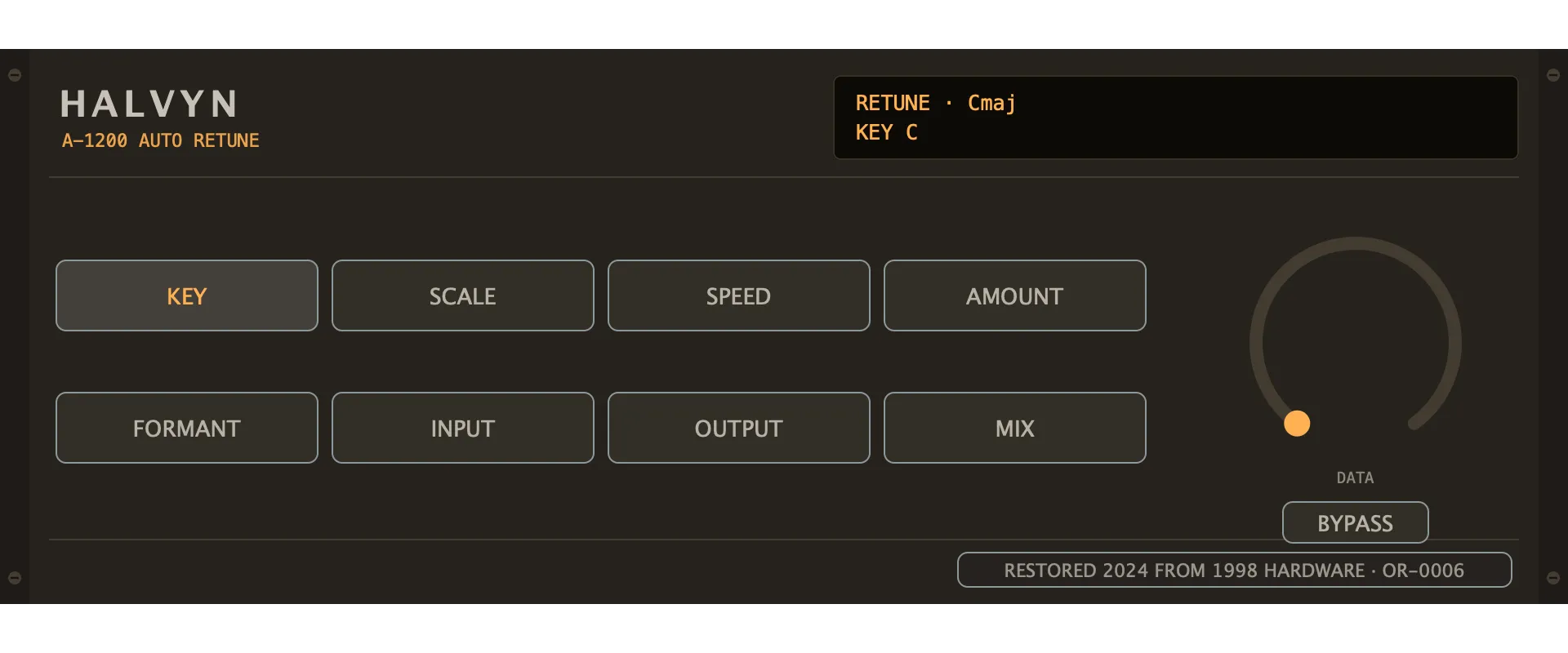
The late-90s robotic pitch-snap — the "Cher effect" — as an effect rather than a corrector, with retune time all the way down to zero.
OR-0007
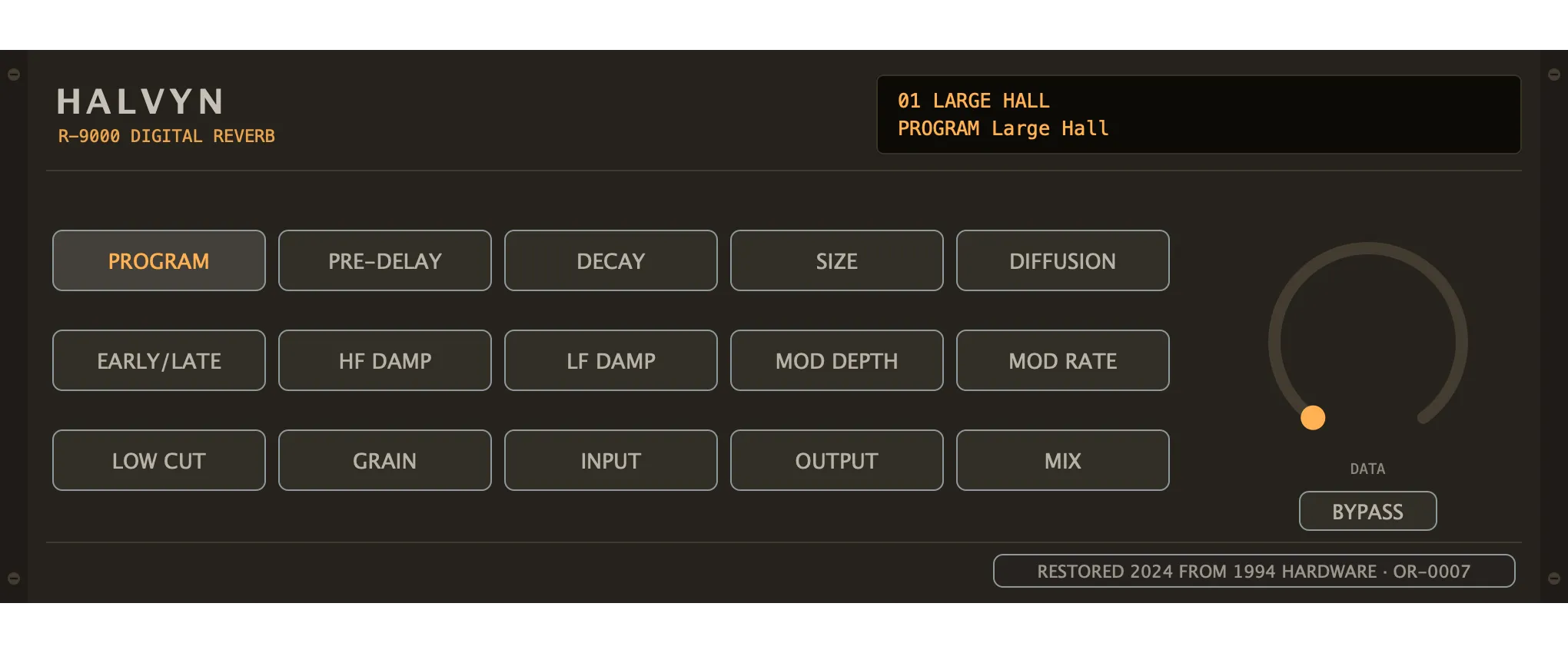
The top of the range — the reverb that made Halvyn's name, denser and deeper than the R-8000, with the parameter set engineers guarded like recipes.
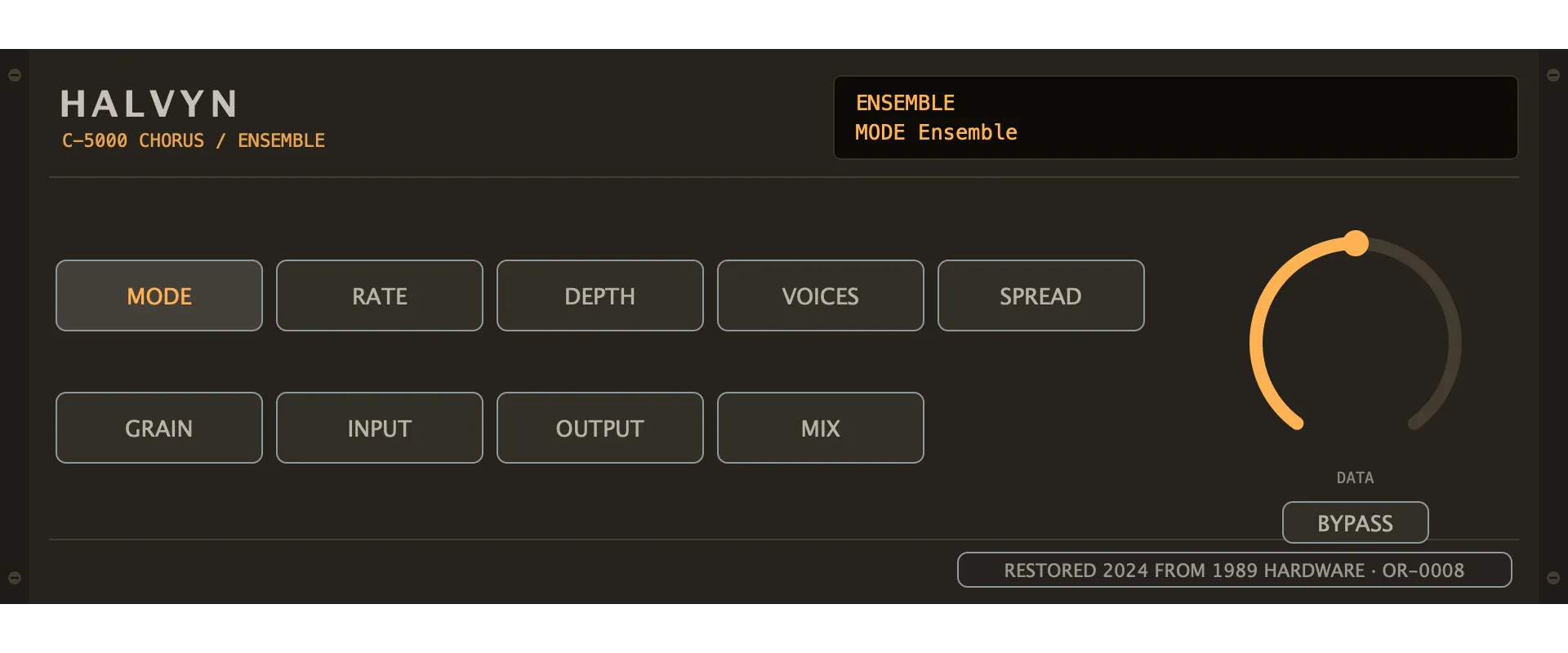
OR-0008
The lush multi-voice widener of the era — the shimmering ensemble on countless 90s mixes.
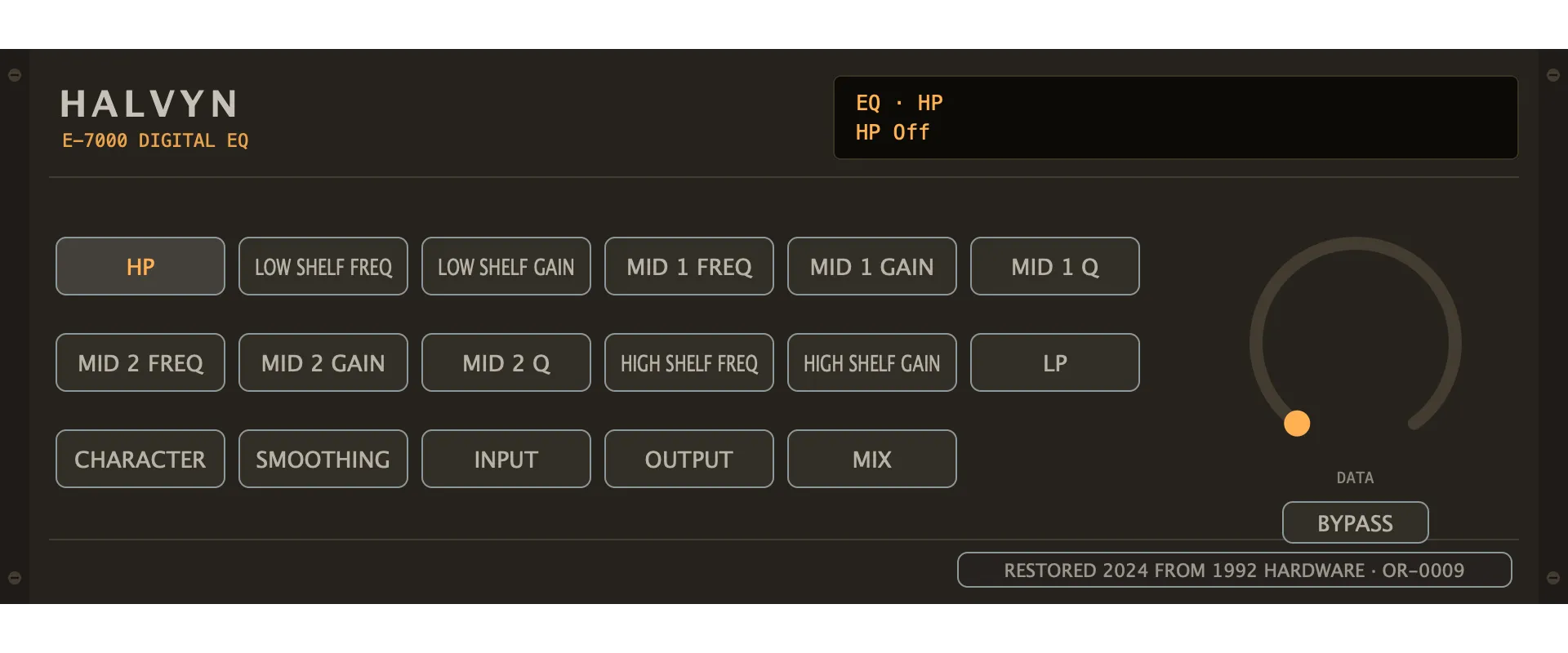
OR-0009
The studio's digital equalizer, coefficient artifacts and all — the slightly brittle, slightly glassy sound of early digital filtering that engineers either loved or fought.
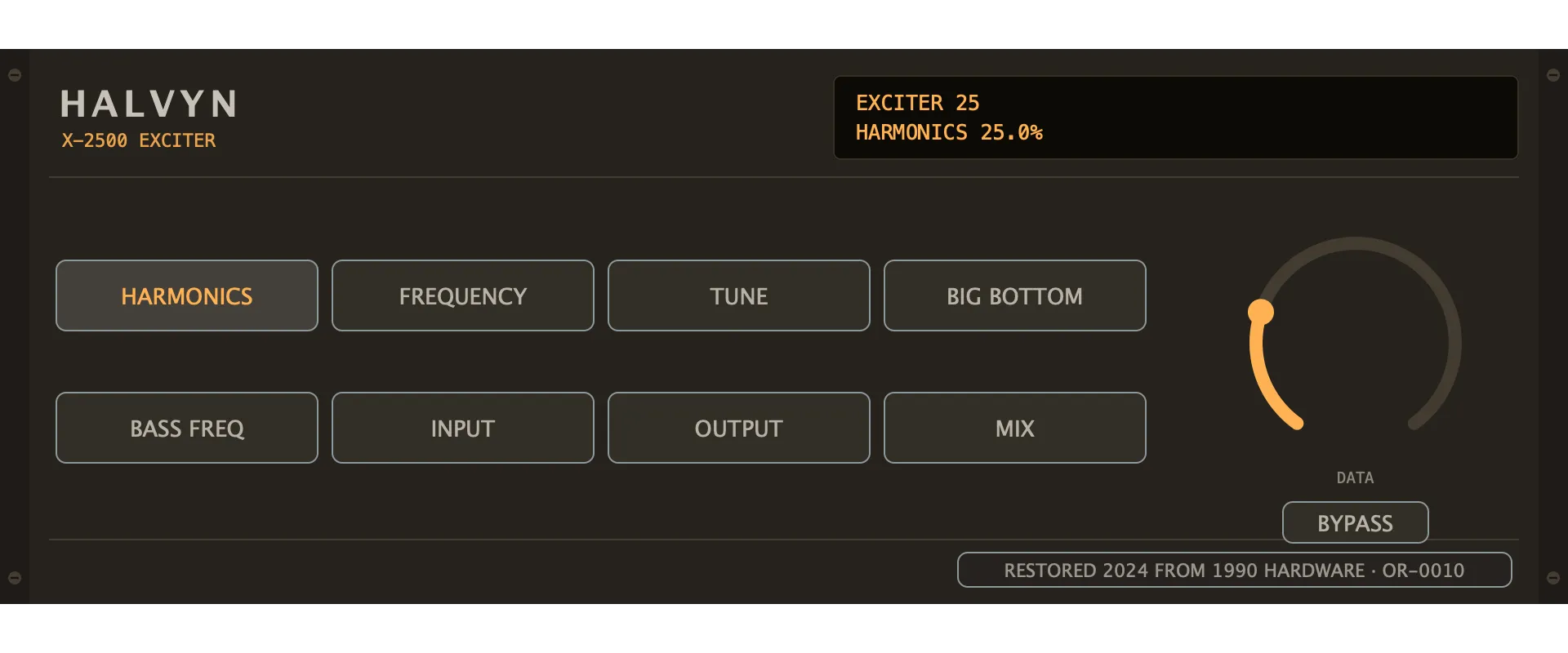
OR-0010
The presence-and-air box — the psychoacoustic enhancer that made things sit forward.
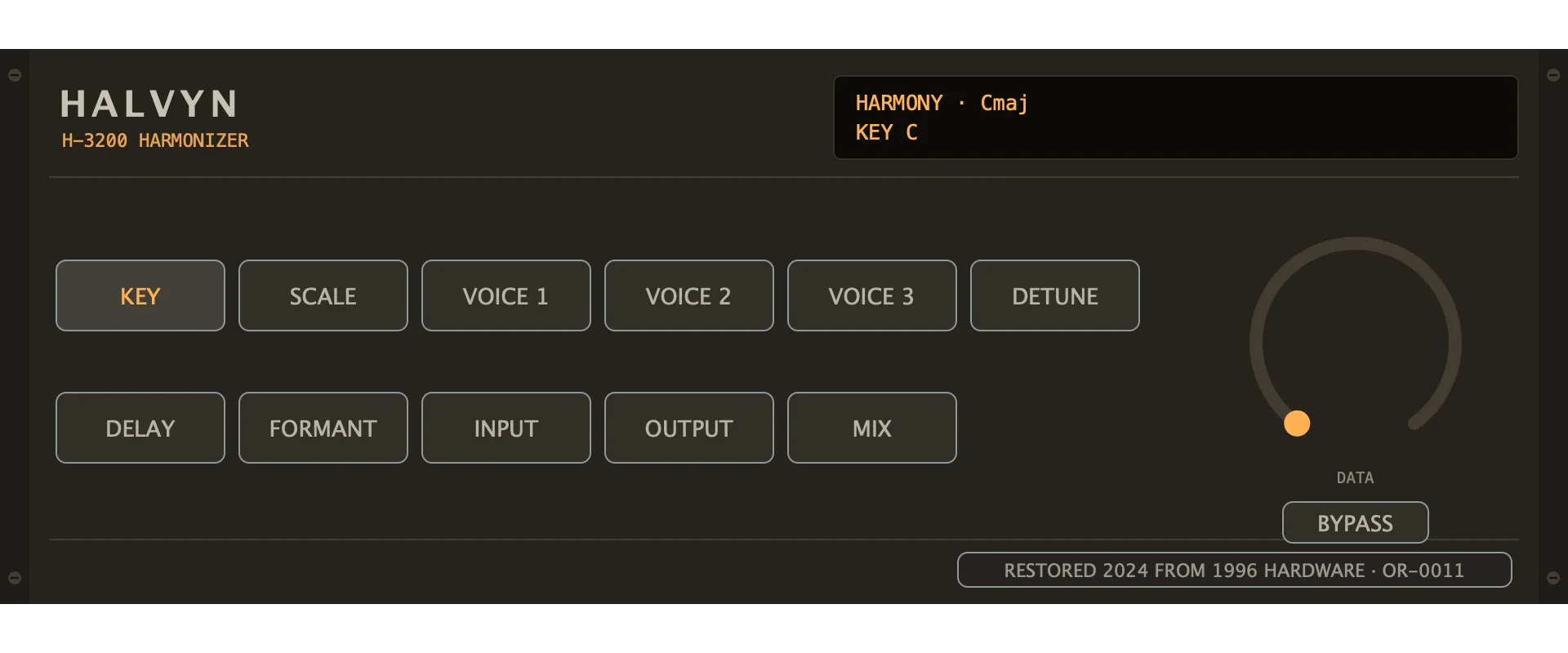
OR-0011
Intelligent, diatonic pitch harmony — the multi-voice harmonizer that built chords from a single line and defined a certain 90s lead sound.